
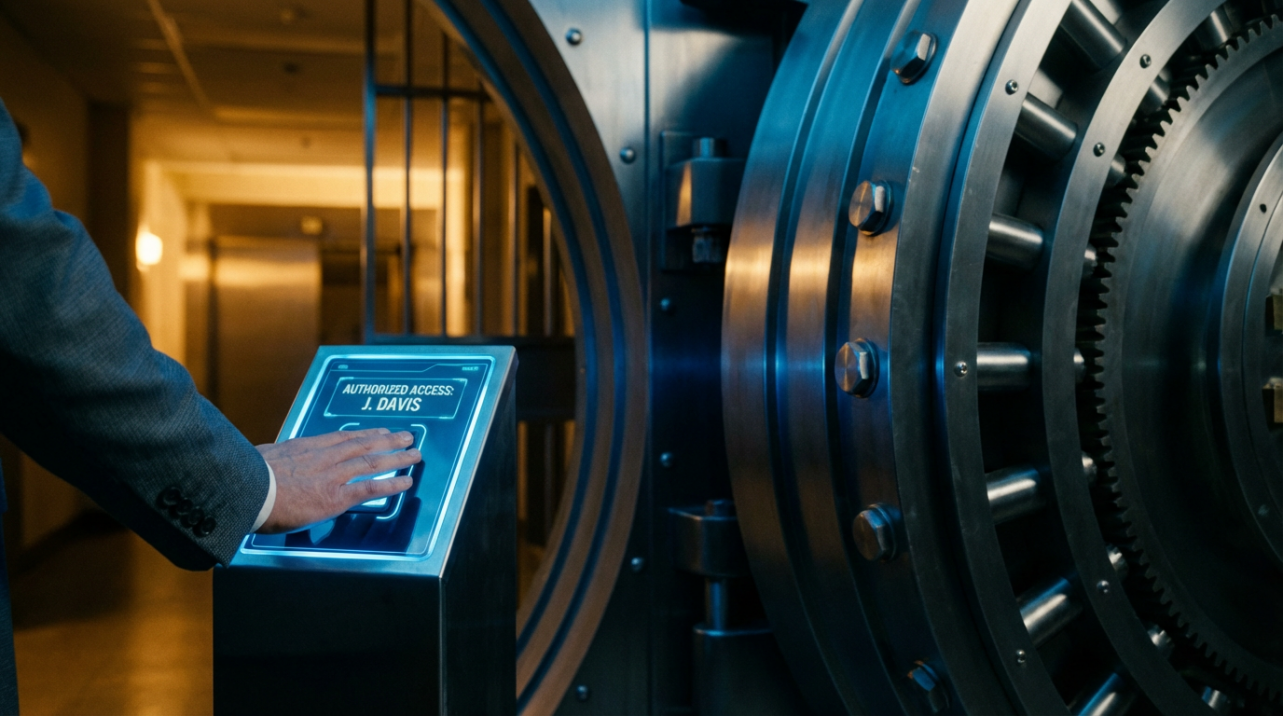
Every time a vault door stays open longer than it should, a supervisor leaves the line, someone scribbles a half-hearted log entry, and you quietly wonder whether today is the day an auditor finds the gap you already know is there. Institutions that combine modern identity checks with pattern-monitoring systems are reducing those manual headaches while tightening control over who gets near high-value cash, documents, and digital "vaults" during the workday. This combination can work well in practice, but it can also backfire if implemented poorly. The following sections explain how it works, where the risks are, and concrete steps to use it for vault access without slowing branches or scrambling payroll.
Why Vault Access Needs More Than Keys and PINs
Most vault processes were built for a world of steel doors, paper logs, and staff who stayed in the same branch for years. Today you are running digital banking, card disputes, and overnight deposit reconciliation on top of that, while fraudsters attack weak passwords and codes at industrial scale. Biometric checks such as fingerprints and face recognition are already familiar to your customers, and a strong majority now say they prefer biometric verification in banking over passwords because it feels both faster and safer.
This matters at the vault because the stakes are higher than for a regular login. When a PIN or key is shared, lost, or written on a sticky note, there is no reliable proof of which person actually opened the vault or accessed a digital safe. Modern biometric platforms for financial services are designed to bind access to a specific person using traits like fingerprints, faces, or irises. They aim to do this consistently across mobile apps, ATMs, branch kiosks, and staff systems. Vendors focused on biometrics in banking and finance emphasize cross-channel coverage and strong customer authentication for exactly that reason.
Imagine a small community bank with three branches and one main cash vault. Two supervisors hold physical keys, a daily combination is shared over the phone, and access times are recorded on a clipboard that might or might not match the core system. Moving to biometric vault entry plus digital logs gives the institution an accurate, person-level record of every vault touchpoint. That simplifies audits, incident reviews, and even timekeeping for staff with vault duties.

What "Biometrics and Behavior" Actually Mean at the Vault Door
When people hear "biometrics plus behavioral analysis," it can sound like a science project. In practice, it is two layers working together: one that confirms "this is the right person" and another that quietly asks "is this how they usually behave?"
Biometric checks in plain language
Biometrics are the physical or voice traits that are hard to fake and impossible to memorize. Banking use cases already include fingerprints and facial recognition for app logins, palm scans for safe-deposit access, and, in advanced setups, iris or vein-pattern scanning. In high-security environments, biometric systems capture a fingerprint, face, palm, or iris, convert it into an encrypted template rather than storing a raw image, and compare each new scan against that template to make a yes/no decision within seconds, as outlined in biometric authentication workflows.
For vault access, that might be a short sequence at the door: an employee badges in with a smart card, rests their palm over a scanner, and the system matches their unique vein pattern to an encrypted record tied to their role. Because traits like palm veins and irises are internal, complex, and stable over a lifetime, well-designed solutions in financial services use them to make forgery extremely difficult while keeping the experience quick and contactless. That complements approaches described in biometrics in financial services.
Behavioral analysis in everyday terms
Behavioral biometrics look at patterns in how someone acts rather than what they look like. In retail digital banking, this might be spending patterns or how a customer swipes and types on their cell phone. At the vault, the patterns that matter are more operational: which users typically access the vault, at what times, for how long, and with which transactions before and after.
Research on biometric trends describes behavioral biometrics as using typing rhythm, device handling, or movement habits to distinguish legitimate users from impostors, and financial-sector analyses show that similar ideas work well for fraud detection in online banking. Credit unions and banks are increasingly augmenting their physical and digital biometrics with behavioral monitoring that flags unusual activity, such as a junior teller opening the vault twice near closing time when that has never happened before, aligning with how biometrics in banking treats behavioral data as a complementary fraud-detection layer.
Think about a branch where vault access normally happens at 8:30 AM and 3:00 PM under dual control. If the system suddenly sees a series of 11:45 PM access attempts from a user who has never worked nights, the behavioral layer can escalate the event immediately, even if the fingerprint or palm scan technically matches. That is the power of combining "who you are" with "how you usually behave."

Are These Systems Ready to Guard a Vault? Strengths and Weak Spots
The obvious question for any operations leader is whether this technology is mature enough to sit between your institution and a serious loss event. Biometrics and behavioral analysis are strong and getting better, but they are not magic, and you must design around their blind spots.
Modern biometric systems increasingly use AI and liveness detection that check for real human traits instead of photos, masks, or recordings. Vendors describe sensors that measure depth, texture, and micro-movements to verify that a live person is present, echoing the emphasis on liveness and anti-spoofing in biometric authentication methods and benefits and in banking-focused biometric solutions. In independent deployments of behavioral biometrics, organizations have seen fraud detection improve by roughly 70% and false positives drop by around 90% compared with traditional rule-based tools. That translates into fewer pointless alerts and less time wasted chasing normal staff behavior.
On the flip side, biometric templates and behavioral profiles are extremely sensitive assets. If a password leaks, you reset it; if biometric templates leak, you cannot reset fingerprints or faces. Industry guidance stresses encrypting templates, avoiding raw image storage, and limiting where data lives, aligning with privacy-by-design recommendations in biometric authentication and warnings about biometric sensitivity in biometrics in banking. You also have to plan for outages: if the network drops or a sensor fails, you cannot afford to lock staff out of the vault, so a well-controlled fallback process is essential.
A simple way to think about the trade-offs is to weigh operational and security benefits against complexity and risk.
Aspect |
Biometrics + behavioral analysis for vault access |
Security strength |
Ties access to physical traits and behavior patterns, making it much harder to share or steal access compared with keys, cards, or PINs. |
Operational impact |
Speeds up routine access and removes manual logging, but introduces new dependencies on sensors, networks, and vendor platforms. |
Fraud detection |
Enables continuous monitoring and better anomaly detection, especially when combined with transaction data, as seen with behavioral methods in biometric trends. |
Privacy and trust |
Raises the stakes on data protection and employee communication; policies must clearly define what is tracked, why, and for how long. |
To put it into numbers, assume a mid-size institution spends about 30 minutes per day per branch reconciling vault access logs with system activity because of missing initials or unclear handwriting. Across five branches, that is roughly 12.5 staff hours per week. An automated biometric and behavioral system that cuts manual reconciliation by even half frees about 6 hours weekly that can be redirected to customer work or deeper audits, while also tightening the evidence trail if something goes wrong.
Rolling It Out Without Disrupting Operations
The technology is only half the story; the other half is how you introduce it without creating bottlenecks at the vault or panic among staff.
A practical approach is to start where risk is highest and volume is manageable. Many institutions begin with high-value vaults, safe-deposit areas, or personal teller machines before expanding to broader branch access, echoing the "define the use case first" guidance for biometric PTMs in financial services deployments. Pair that with a limited group of trusted staff and clear metrics: average time to open the vault, number of failed authentications, and how often behavior-based alerts fire in a week.
On the technology side, you want systems that integrate cleanly with your existing identity and access platforms so you are not running a parallel universe just for the vault. Banks rolling out digital onboarding platforms such as those described in digital banking biometric solutions use the same identity backbone for account opening, app access, and high-risk transactions. You can mirror that pattern by using one strong identity platform to handle both digital and physical vault access policies.
From a day-to-day operations angle, the experience at the vault door needs to be faster than your current process on a good day, not just in theory. Picture a Monday morning cash-prep rush: if it normally takes two people 3 minutes to unlock, sign, and log the vault, your biometric flow needs to be consistently under that, including the occasional retry when a scanner is finicky. That means running real pilots during live hours, not just in a lab, and adjusting thresholds so that small variations in how someone places their hand or looks at a camera do not cause repeated lockouts.
There is also a benefit for time management and payroll accuracy. When vault access is tied to named individuals with precise timestamps, you get a trustworthy record of which employees were on-site, when dual control actually happened, and how long cash-prep or settlement took. If you integrate those records with scheduling and payroll systems, you can resolve questions about after-hours vault work or weekend callouts quickly, rather than digging through paper logs and security camera footage.
Using the Data Without Turning Into Big Brother
The fastest way to sink a biometric and behavioral project is to make employees feel like you are secretly rating their every move. That is not just a culture issue; it is a compliance and legal risk as well.
Regulators and industry groups increasingly treat biometric and behavioral data as highly sensitive, with frameworks such as GDPR, state privacy laws, and biometric-specific statutes demanding explicit consent, clear purpose limitation, and strong controls on how data is stored and shared. Guidance on biometric authentication methods and benefits stresses that organizations must obtain clear consent, minimize the data they collect, and provide transparency and auditability around biometric processing, while banking-focused discussions of biometrics in banking highlight regulatory obligations to safeguard customer information.
For vault access, that translates into a few practical guardrails. Define and document the purpose narrowly, for example, "to authenticate employees for vault and high-security room access and to support security investigations and regulatory audits," rather than "to monitor productivity." Separate biometric and behavioral data needed for security from HR performance metrics; use access logs to confirm time and attendance when needed, but do not quietly use them to score employees on speed or breaks. Set retention limits so that access data does not live forever without a business reason, and make sure staff understand how long records are kept and who can see them.
Imagine explaining the system to a new hire who just finished teller training. If you can say, in one breath, that the vault scanner exists to keep them safe from being blamed for someone else’s access, that the system only records what is needed to prove who opened the vault and when, and that the data is encrypted and time-limited, you are on the right track. If you stumble into vague promises about "analytics" and "optimization," expect pushback from staff and possibly from labor counsel.
FAQ: Common Questions From Operations Leaders
Will biometrics and behavioral analysis slow down vault operations?
They should not, if you design the process around real branch workflows instead of vendor demos. Modern biometric systems verify within seconds, and contactless methods such as face, iris, or palm-vein scanning are built to be fast and hygienic, consistent with descriptions of real-time verification in biometric authentication. The key is to test under peak conditions, tune thresholds to avoid constant false rejections, and keep a tightly controlled fallback procedure for when sensors or networks misbehave so that staff are not stuck waiting at the door.
Does combining biometrics and behavior mean constant surveillance of my staff?
No, not if you set the rules correctly. Behavioral analysis for vault access should focus on security patterns such as unusual access times, locations, or combinations of actions, similar to how behavioral signals are used to flag suspicious activity in biometrics in banking and in broader biometric authentication methods. If you communicate that the system exists to protect both the institution and employees from fraud and false blame, and you avoid reusing the data for unrelated productivity scoring, you can get the fraud-prevention benefits without creating a surveillance culture.
Is this only realistic for big banks, or can smaller institutions afford it?
Smaller banks and credit unions actually stand to benefit a lot because they often rely on a few key people for vault access and have less room for error. The growing market for biometric and fintech solutions has driven down cost and made multi-factor biometric authentication, including device and phone-based signals, more accessible to institutions of all sizes, as reflected in trends in biometric technology for fintech. For a small institution, starting with one main vault or a cluster of high-risk locations and choosing cloud-connected, standards-based systems can spread costs over time while still improving security and audit readiness.
Closing Thoughts
Biometrics plus behavioral analysis will not fix a broken vault process on their own, but used well they can turn a fragile mix of keys, PINs, and paper logs into a clear, reliable record of who touched what, when, and why. The institutions that succeed with this trend are not the ones buying the fanciest sensors; they are the ones that pilot in real branches, design around staff and customer experience, and write down simple, honest rules for how the data can be used. Treat that combination of technology and discipline as part of your core operations toolkit, and your vault can become both harder to breach and easier to manage.


Share:
Coworking 3.0: Automated Zone Access Based on Membership Tiers
Modular Upgrade Trends: Why “All-in-One” Boxes Are Yielding to Scalable Components