
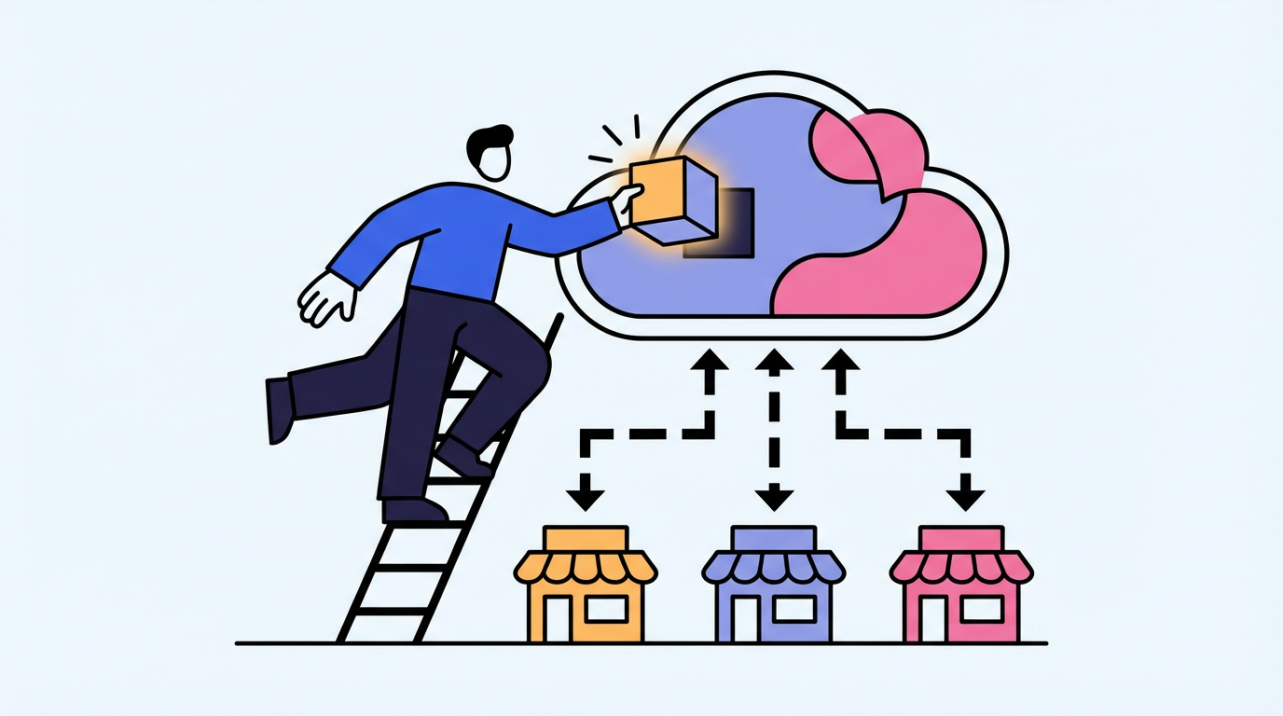
A unified attendance system keeps stores aligned and moves approved hours to payroll without surprises.
Are you chasing missed punches from three locations while tomorrow's payroll deadline closes in? When attendance approvals live in one shared system, managers resolve exceptions faster and you spot patterns before they turn into payroll errors. You get a practical way to centralize attendance, protect payroll accuracy, and give managers back time.
Why chain store attendance is a trend worth fixing
Attendance is time management in practice
Employee time management is the practice of organizing and optimizing workforce time so each minute supports service and profitability employee time management. In a chain, attendance is the front door to that system, because a missed punch at one location becomes a payroll exception for headquarters. For example, if six stores each have five missed punches a week and each fix takes 10 minutes, that's 5 hours of manager time lost before you even run payroll.
Manual processes multiply exceptions
Manual task and attendance processes remain common in retail, and paper forms are still widely used and easy to lose or damage, even though many frontline employees say they would be more productive with digital tools. On the ground, the confusion usually comes from exceptions scattered across paper, texts, and email, not from people skipping shifts. When a holiday display task and a shift swap land the same day, the timecard often fails to reflect what actually happened, which is how overtime and break compliance slip through.
What a unified cloud platform changes
One store clock for every location
Many operators rely on a store clock, an hour-by-hour schedule that tells staff what should happen in the store, and a unified cloud platform turns that into a shared, real-time plan across every location. The schedule, daily tasks, and attendance punches sit together, so a change in one store is visible to the rest of the chain and to payroll. If a manager saves 15 minutes a day on schedule edits because changes sync automatically, that's more than an hour a week back on the floor.

Pros, trade-offs, and real impact
Integrated tools can cut scheduling time in half; one retailer achieved that with integrated tools. The upside of a single platform is fewer handoffs and a faster path from schedule to punch to payroll, but the trade-off is training time and the need for clear approval rules. A practical way to manage that trade-off is to run a two-week pilot at one busy store, then roll the rules to the rest once the exception types are predictable.
Attendance data is payroll data
Compliance and accountability stay with you
Payroll accuracy starts with compliant setup such as an EIN and correct worker classification, and outsourcing payroll still leaves the employer legally responsible for errors compliant setup. Annual W-2 and 1099 deadlines compress the cleanup window, so attendance approvals need to be locked in well before payroll week. If a timecard dispute resurfaces months later, the audit trail needs to show who approved the change and why.
Budgeting and system choice
Retail payroll typically targets labor at 15% to 30% of revenue, so the payroll approach and its fees are a budgeting decision, not just an HR choice labor targets. If a $100,000.00 monthly revenue target carries a 20% labor budget, the payroll cap is $20,000.00, and a 2% timecard inflation from missed edits would cost $2,000.00. The cost ranges below help decide whether the unified platform should include payroll or integrate with a provider.

Payroll approach |
Typical cost range |
Best fit in a chain |
In-house software |
200.00 per month plus 10.00 per employee per month and 500.00 setup |
Tight budget, fewer than 20 employees, and strong in-house admin |
Outsourced payroll service |
150.00 per month plus 15.00 per employee per pay period, setup often waived but can reach $500.00 |
Multi-location teams that need admin relief but keep HR in-house |
PEO |
About $1,395.00 per employee per year on average, with reported average savings of $1,775.00 per employee per year |
Chains that want payroll plus HR, benefits, and risk management support |
Make it stick across every location
Design the workflow around roles, not personalities
Resource management in retail focuses on reducing waste by organizing staffing, inventory, budgets, and operations resource management. In a unified attendance rollout, that means defining who approves time off, who clears missed punches, and who can swap shifts by role, not by store personality. For example, an assistant manager can approve swaps that stay inside policy, while the store manager handles exceptions that trigger overtime or compliance checks.
Protect peak hours with time-blocking
Time management works when you plan the work, not just the hours, by scheduling focused blocks and estimating tasks realistically time management. Set a daily 20-minute window right after the morning huddle to clear attendance exceptions and a weekly 30-minute review to spot repeat issues before payroll week. That cadence keeps attendance admin out of peak selling times.
Tie attendance to service and sales
Service failures have a measurable cost; poor service has led 78% of consumers to abandon a transaction and 32% to leave a brand after one bad experience. When schedules match foot traffic, associates spend more time with customers and less time in back-room corrections, which protects sales. If a weekend rush typically needs six associates and two call out, a unified platform's early alerts give you time to fill the gaps and protect service.
Get attendance aligned once, and every store runs calmer, payroll stays clean, and managers can lead instead of chase.


Share:
Does a 5-Person Startup Need an Attendance System?
Analyzing the Safety of Biometrics in 2026 with the Rise of AI