
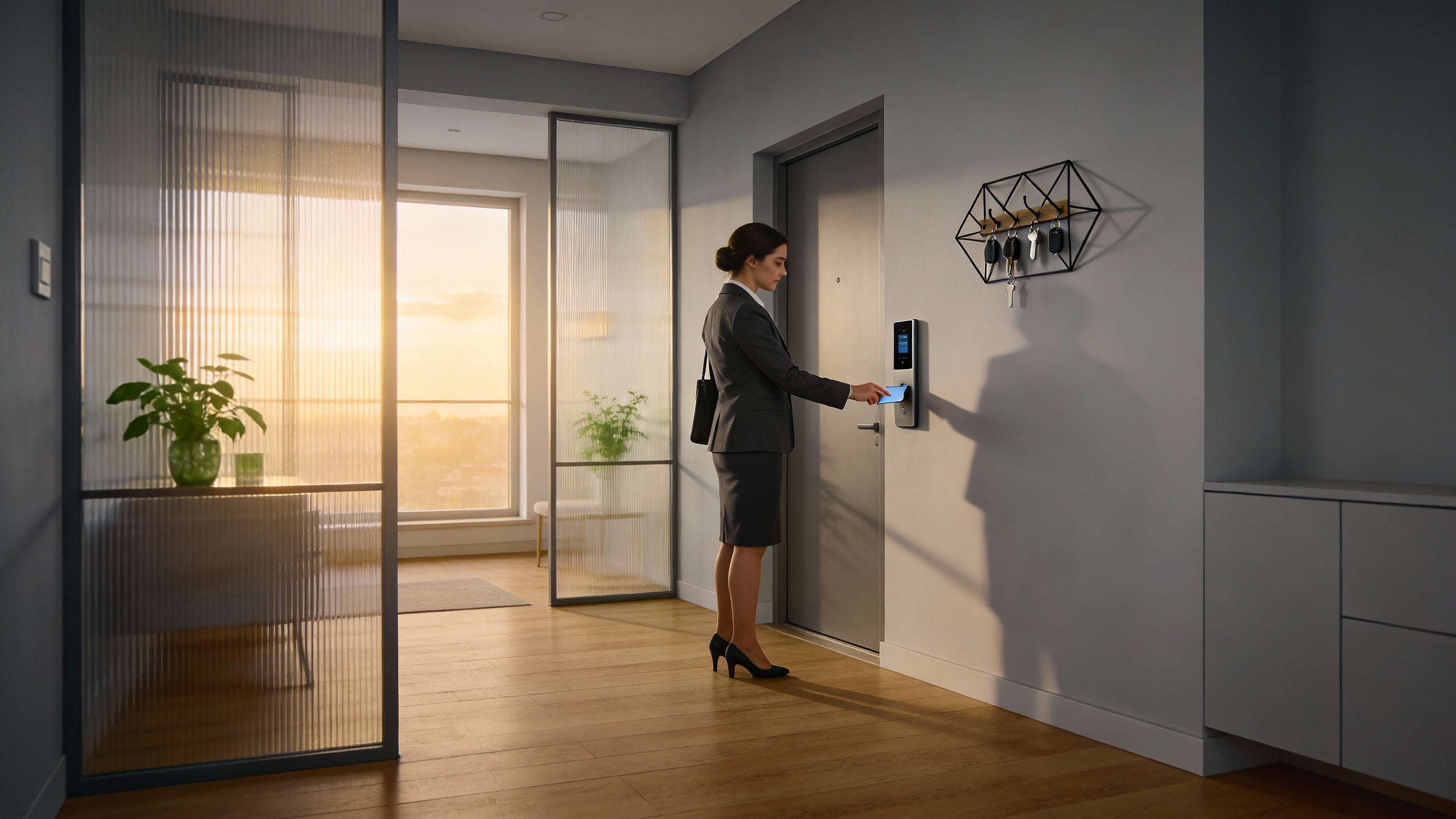
Summary: Smart, cloud-based access control turns your doors into revenue tools—unlocking new membership tiers, tightening time tracking, and giving you data to grow the right space mix while cutting labor waste.
See Access Control as a Revenue Engine, Not Just Security
If your door system is treated as “building overhead,” you’re leaving money on the table. Modern guides like the Coworks door access control guide frame access as core infrastructure for security, member experience, and operations.
Security agencies such as the UK’s NPSA shared workspace guidance also stress that shared workspaces are high-risk for theft and IP leaks, so you need more than a metal key and a clipboard.
Here’s the operational shift: stop asking “How cheap can we secure the door?” and start asking “How can each door, time window, and zone support a specific product or process?”
Once you think that way, access control becomes a profit center that supports pricing, staffing, and space planning—not just a sunk cost.

Turn Doors and Time Windows into Sellable Products
A good access platform lets you control who gets in, where, and when. That’s your blueprint for new, higher-margin SKUs.
Practical plays I see working:
- “Business hours” vs “24/7” memberships with clear price gaps
- Weekend-only or evening-only passes using the same desks
- Add-on access to premium zones (pod rooms, production studio, executive lounge)
- Short-term project keys for teams renting a room for 2–4 weeks
You don’t need to overcomplicate the tech stack to start. Cloud systems highlighted by Avigilon coworking access guidance support cards, key fobs, and mobile credentials, plus simple rules by role or membership tier.
Nuance: High-end biometrics belong on server rooms and labs, not the kitchen door—Avigilon and others recommend matching tech strength to the actual risk level in each zone.
Quick sanity check: if you sell just 15 members an extra $40.00 per month for 24/7 access, that’s $600.00 per month or $7,200.00 per year. That alone can cover a modern system and then some.

Automate Check-Ins and Fix Time & Payroll Leakage
As an operations fixer, I see the same waste everywhere: staff stuck opening doors, chasing timesheets, and arguing about who was “really there” at 8:00 AM.
Modern access systems log every entry. Shared office providers in NYC report that card and fob systems provide time‑stamped records for later review, Corporate Suites’ security overview.
Put those logs to work:
- Use door data as your primary “clock-in/clock-out” source for salaried staff and hourly community teams
- Spot chronic late arrivals and ghost shifts without manual headcounts
- Auto-flag entries outside scheduled shifts to tighten overtime approvals
From a payroll accuracy angle, access logs give you objective data. If one community manager spends 20 minutes a day letting people in and another doesn’t, you’ll see it, quantify it, and fix it.

Use Access Data to Shape a More Profitable Space Mix
Your doors are quietly collecting the utilization data you wish you had.
Coworking tools show that integrated access control provides real-time occupancy and churn signals, as outlined in the Coworks access guide. The same concept holds even if you’re not on that platform—door logs tell you which rooms and zones actually earn their keep.
Ways to turn that into revenue:
- If a “boardroom” sits empty while small phone booths are always booked, split the room or add more booths
- If hot-desk entry drops for specific members, trigger an outreach workflow before they churn
- If certain days or hours are slammed, introduce peak pricing or incentives to spread demand
Example: if your 8-person war room is used 10 hours a month at $40.00/hour while a 2-desk office could rent at $600.00/month, you’re trading $400.00 of predictable revenue for $400.00 of variable revenue—and probably losing in practice. The logs give you the proof you need to reconfigure.
Make Security and Privacy Part of Your Sales Pitch
Access control doesn’t just protect you; it helps you win and keep higher-value members.
Ethics-focused operators emphasize privacy, data security, and community responsibility as core brand pillars, as described in BHIVE Workspace’s ethical coworking article. That’s not “nice to have” anymore—corporate clients now ask detailed questions about access, logs, and data handling.
Use your system to confidently say:
- “Only authorized people can reach your suites and meeting rooms.”
- “We can give you auditable logs for compliance and incident reviews.”
- “We control visitor access and remove credentials the moment contracts end.”
Operators that combine strong access control with clear policies build trust. Trust reduces churn, supports premium pricing, and attracts teams that care about compliance and confidentiality—not just cheap desks.
If you design your access control with revenue, time, and payroll in mind from day one, it stops being a line item and starts behaving like one of your most reliable growth tools.


Share:
The Future of Liveness Detection: How AI Will End "Photo Spoofing" in 2026
Wearables in the Office: Smartwatches as Access Keys