
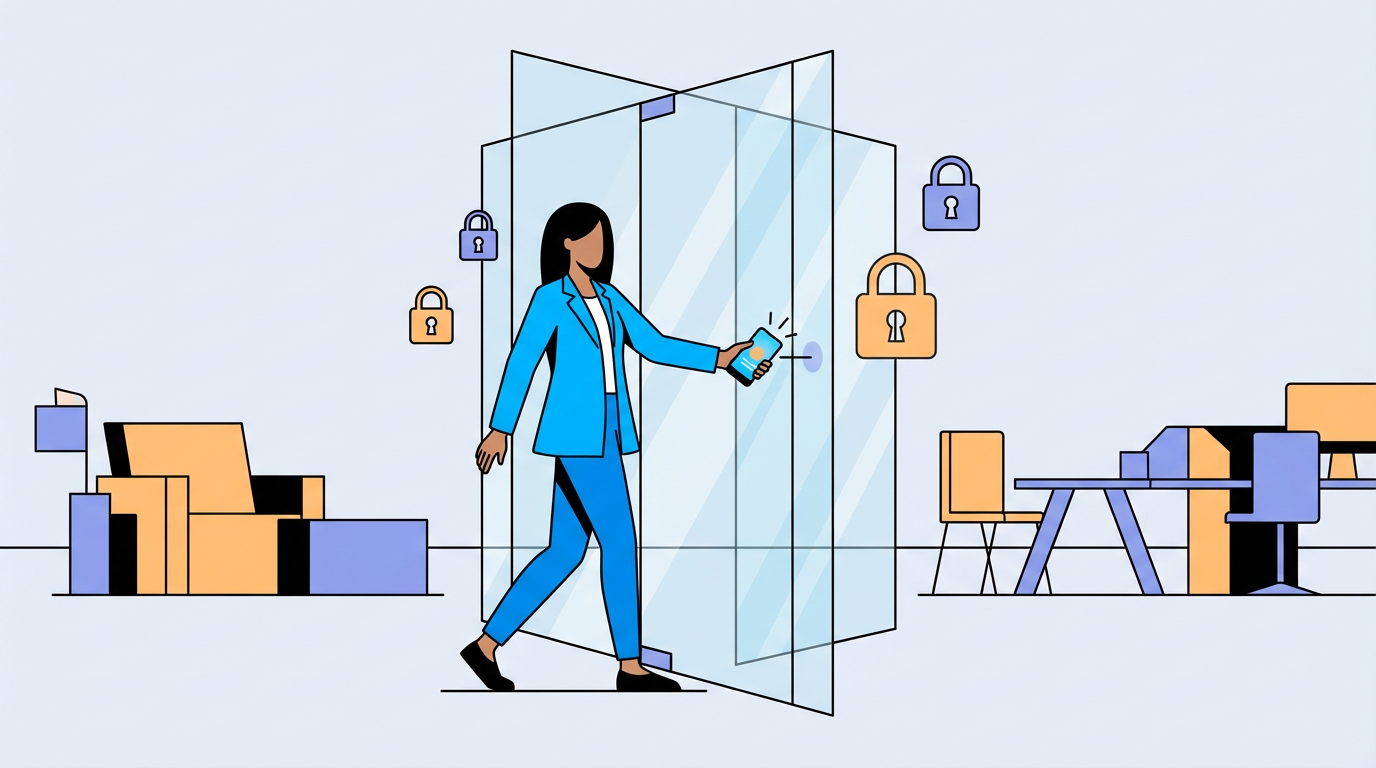
By 2026, glass-fronted, trace‑free access systems can give your office a modern look, smooth traffic, and cleaner time and payroll data without sacrificing privacy.
Glass-heavy, "see-through" offices are becoming the default, and the next wave is trace‑free access: clean glass fronts, minimal hardware, and digital logs instead of clunky badges and sign‑in sheets. Done right, you get smoother traffic flow and more accurate time and payroll data without turning your team into fish in a bowl.
Why Glass and Trace‑Free Access Are Converging
Modern offices increasingly use glass to shrink floor space while keeping light and collaboration high. Custom interior glass walls break up space without closing it in, as shown in many modern offices using glass. Demountable glass sliding systems are growing fast because they reconfigure easily, free up floor area, and move with you when your layout changes, turning them into a flexible asset rather than a sunk build‑out.
Trace‑free access simply means you are not ripping up floors or hanging bulky hardware every time you change a door. Think frameless glass, overhead tracks, in‑frame locks, and wireless readers. The building shell stays clean, and your access control lives in the glass, hardware, and software.

Operationally, that matters. You can rezone teams, add a project room, or split a department without weeks of construction or downtime. For a 20‑person shop, avoiding even two days of chaos can save dozens of productive hours and keep client work on schedule.
Designing Transparency Without Killing Privacy
Employees love natural light but hate feeling watched 24/7. One survey in a glass-focused study reported staff feeling like "fish in a bowl" when offices went fully transparent, prompting owners to add privacy solutions for glass offices. The fix is not to go back to drywall, but to design the glass intelligently.
Use a simple zoning rule: public, semi‑private, private. Public spaces such as reception and collaboration zones can stay clear. Semi‑private areas such as sales pods and shared offices get bands of frosting or pattern. Private rooms for HR, payroll, or performance meetings use smart film or switchable glass so one tap takes you from open to opaque, a capability already popular in boardrooms using smart film glass.
From an operations perspective, clear privacy rules prevent messy exceptions: no ad‑hoc "do not disturb" tape on glass, and no managers booking the only private room for routine huddles. Build the privacy map once, then enforce it through your room-booking rules.
Getting Trace‑Free Access Installed Safely
Glass is not a DIY playground. Incorrect measurements, poor surface prep, and the wrong glass type are some of the most expensive mistakes, leading to drafts, leaks, and unsafe installations, as highlighted in a review of common glass installation mistakes. For high‑traffic office doors, you also need tempered or laminated safety glass and hardware sized for the actual door weight, not the catalog photo.
Safety codes and insurance both expect you to use safety glass and qualified installers in commercial spaces, which is why experts strongly recommend tempered or laminated glass in commercial spaces. Combine that with good door closers, correctly aligned frames, and professional sealing, and you avoid the constant re‑adjustment, slamming doors, and air leaks that quietly drive up your energy bill.
When you brief contractors, make a few points non‑negotiable. Use tempered or laminated safety glass in all people‑path doors. Size pivots and closers to your actual door weight and traffic. Design for demountable tracks and frames where possible. Build a maintenance plan with quarterly checks of alignment, seals, and hardware.
Turning Glass Doors Into Time and Payroll Tools
The real 2026 move is marrying clean glass fronts with invisible, digital access control. Modern sliding and pivot systems already include automatic doors that support touchless access, making it easy to pair them with card, fob, or phone-based credentials. Hardware vendors also offer glass-friendly mechanical and electrical locks that integrate into larger commercial glass door hardware suites.
From an operations and payroll standpoint, that is valuable. Each controlled doorway becomes a time stamp: who entered a zone, when, and for how long. With the right integration, this can automatically clock staff in and out when they enter or leave the suite, support job‑costing by area (shop floor vs. office vs. warehouse), and trigger alerts when people access restricted rooms off schedule.
You cut down on "buddy punching," clean up missing punches, and reduce the time your admin spends chasing corrections.

For a 30‑person team, trimming even 10 minutes of manual timecard fixing per person each pay period adds up to hours saved every month, without adding a single physical time clock.
Fast Implementation Playbook
If I were rolling this out in your office, I would keep it to five moves:
- Map people flow and define public, semi‑private, and private zones.
- Decide where glass plus access control will actually move the needle (entry, lab, server room, payroll office).
- Choose demountable glass systems and access hardware that connect to your existing time and payroll stack.
- Pilot on one corridor or department for 60–90 days, and measure traffic and timecard errors.
- Standardize: lock in your specs, contractor, and maintenance rhythm before expanding.
Transparent offices and glass doors are not just a design trend; they are a way to quietly upgrade how people move, how safe they are, and how clean your time and payroll data can be, without leaving scars on your building every time your org chart changes.


Share:
The End of “Forgot-My-Card” Anxiety: How Biometrics Rescue Forgetful Staff
Office Design Trends 2026: Why Minimalism Rejects Bulky Time Clocks