
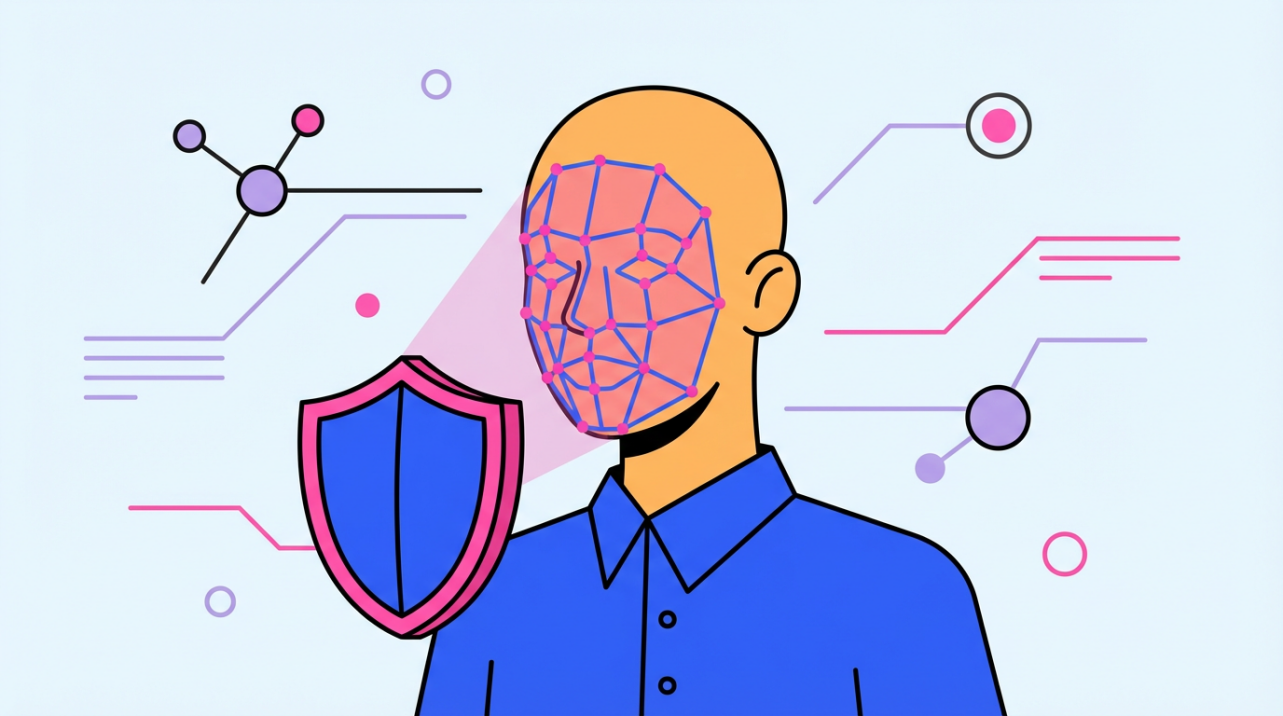
Liveness detection adds a live-presence check to biometric logins so printed photos and screen replays fail even when the face looks right. When tuned for your risk, it protects time clocks and payroll accuracy without turning clock-ins into a bottleneck.
Ever had a late-night payroll run because someone swore they were on site and the time clock said yes? A simple live-person check blocks common photo and replay tricks that basic face checks can miss, which means fewer disputed punches. You will get the practical steps to pick the right method and roll it out without slowing the shift.
How liveness detection blocks photo spoofing at the camera
Liveness detection verifies a biometric sample comes from a live, present person rather than a photo or video. For a time clock, that adds a simple "are you really here right now?" gate before the system trusts the face match.
Photo and video replays are common presentation attacks, and systems look for cues like moire from screens, glare, or odd shadows. Picture a worker holding a phone with a selfie up to the kiosk; those screen artifacts and unnatural reflections are what the check is trained to reject.

What the system actually measures
Modern systems combine motion analysis, texture analysis, depth sensing, and challenge-response prompts to separate live faces from replicas. In practice, that means a printed photo lacks natural blink patterns and a replayed video struggles to respond to a random prompt in real time.
Active vs passive liveness for time clocks
Active liveness asks for a quick action, while passive runs in the background, and that trade-off between strength and ease is real active vs. passive liveness. For payroll accuracy, the question is whether an extra step at every punch is worth the added assurance or if you save it for higher-risk moments.
Active methods can be more precise but add user friction, while passive methods are faster and smoother but less comprehensive active and passive methods. The comparison below keeps the decision grounded in what happens at the time clock.
Approach |
What the worker experiences |
Main upside |
Main trade-off |
Active liveness |
A short prompt like blink or turn |
Stronger proof of presence |
Slower flow and more user error |
Passive liveness |
No prompt, background check |
Fast throughput |
Relies more on device quality and environment |
Passive checks are typically frictionless and take about 1–2 seconds, which matters at a shift change. If 25 people line up and each scan adds 2 seconds, that is roughly 50 seconds of extra line time, which is still manageable but only if the hardware and lighting are consistent.
Match the method to your hardware
Passive liveness depends on camera quality, so the method has to fit the devices you already have on the wall or in the field. If your clock is an older tablet with a low-light camera, using an active prompt for enrollment while keeping daily punches passive can balance accuracy and speed.
Rolling out liveness detection without slowing payroll
Liveness detection is commonly used in onboarding and identity verification because it blocks spoofed biometrics before access is granted. In a small business, that means the strictest checks should happen when a new hire is enrolled or when someone is re-verifying after a device change, not necessarily every time they clock in.
Biometrics should not stand alone, so pair liveness with a second factor when access is sensitive. A practical example is requiring a short PIN or supervisor approval when someone edits a timecard or approves overtime from a back office computer.
Biometric data is effectively permanent, which makes any exposure long-lasting effectively permanent biometric data. Treat stored templates like high-value assets by limiting who can access them and keeping retention as lean as the workflow allows.

Protect biometric data in transit and at rest with encryption and strict access controls, then back it with regular audits to spot misuse. For a distributed workforce, that means verifying where biometric data is stored and how audit trails are reviewed.
Performance can degrade with poor cameras, lighting, or network conditions, so plan a fallback path. In day-to-day operations, the fix is often as simple as better lighting at the clock or a clear capture zone, plus a supervised alternative when a scan fails.
Liveness detection is the practical guardrail that keeps photo tricks from quietly inflating payroll and eroding trust. Start with the highest-risk moments, keep daily punches fast, and protect the data like the permanent asset it is.


Share:
Creative Agencies: Managing Zone Access in Open-Plan Offices
How to Improve Office Security Without Increasing Budget?