
Do you ever feel like your team is sprinting all shift long, yet orders still go missing and overtime quietly spikes because no one can prove where the time went on the floor? Warehouses that tie automation into their core systems consistently cut wasted walking, reduce mispicks, and gain clean digital trails for both security and labor. Pairing drones and robots with access control can tighten operations, protect inventory, and make payroll far more accurate without turning your building into a science project.
Why Drones, Robots, and Access Control Are Converging
Warehouse automation is already reshaping day‑to‑day operations in facilities of every size, from regional distributors to e‑commerce hubs, as robots take on repetitive movement and scanning tasks while humans focus on decision work and exceptions, streamlining logistics. At the same time, access control systems have quietly become more sophisticated, shifting from simple badge readers to software‑defined zones, time‑of‑day rules, and detailed audit logs. When you connect these two worlds, you stop thinking of locks and robots separately and start orchestrating how people, machines, and inventory move together.
The warehouse automation market is projected to reach $36.4 billion by 2028 warehouse automation market is projected to reach $36.4 billion by 2028. That scale signals that the winners in the next decade will be the facilities that turn automation into measurable financial returns rather than cool demos. Drones that count pallets and robots that tug carts matter less than the fact that every move they make is time‑stamped, tied to an order, and linked to who is allowed into which zone. That is where time management and payroll accuracy start to improve: not from the gadget, but from the integrated data.
Automation works best when it is tightly integrated into the rest of your warehouse systems instead of sitting in its own silo with separate screens and spreadsheets. Access control is no different. If the badge readers talk to your warehouse management system (WMS) and your timekeeping tool, you can lock down high‑value cages and cold rooms, capture who enters and when, and link that to both inventory movements and pay rules, such as shift differentials or hazard pay.
Modern automation trends also lean heavily on connected devices and data, where sensors, scanners, and smart equipment feed live status back into planning and scheduling tools powered by automation and the IoT. Drones and robots become roaming data collectors, constantly updating stock locations and conditions, while the access control system acts as the traffic cop, deciding who and what gets into each aisle or dock at a given moment. The result is fewer surprises and far less time spent chasing exceptions.
From Long Walks to Goods‑to‑Person Flows
In traditional warehouses, people burn hours walking long aisles, checking racks, and hunting down pallets, often with a clipboard or a handheld device. Automated storage and retrieval setups flip that script by bringing goods to the worker, using software‑controlled racks, shuttles, and robots to move inventory instead of legs and forklifts. That shift not only speeds up picking and shipping, it also reduces errors and product damage because the path and handling are standardized rather than improvised every time.
When you layer access control on top of those automated flows, you gain structure. Only authorized staff can open certain gates, trigger a conveyor section, or enter a high‑risk zone where robots move at higher speed. The system knows exactly which operator was at which workstation when a tote was picked, which makes it easier to investigate shortages without starting a blame game across the entire shift.

What “Robots + Access Control” Actually Looks Like on the Floor
Drones and Robots as Digital Co‑Workers
In practical terms, drones and robots usually tackle a short list of work: moving totes or carts between zones, performing cycle counts on upper racks, scanning pallet labels at receiving, and shuttling small items to pack stations. These are jobs that chew up human time and attention but do not require nuanced judgment most of the time.
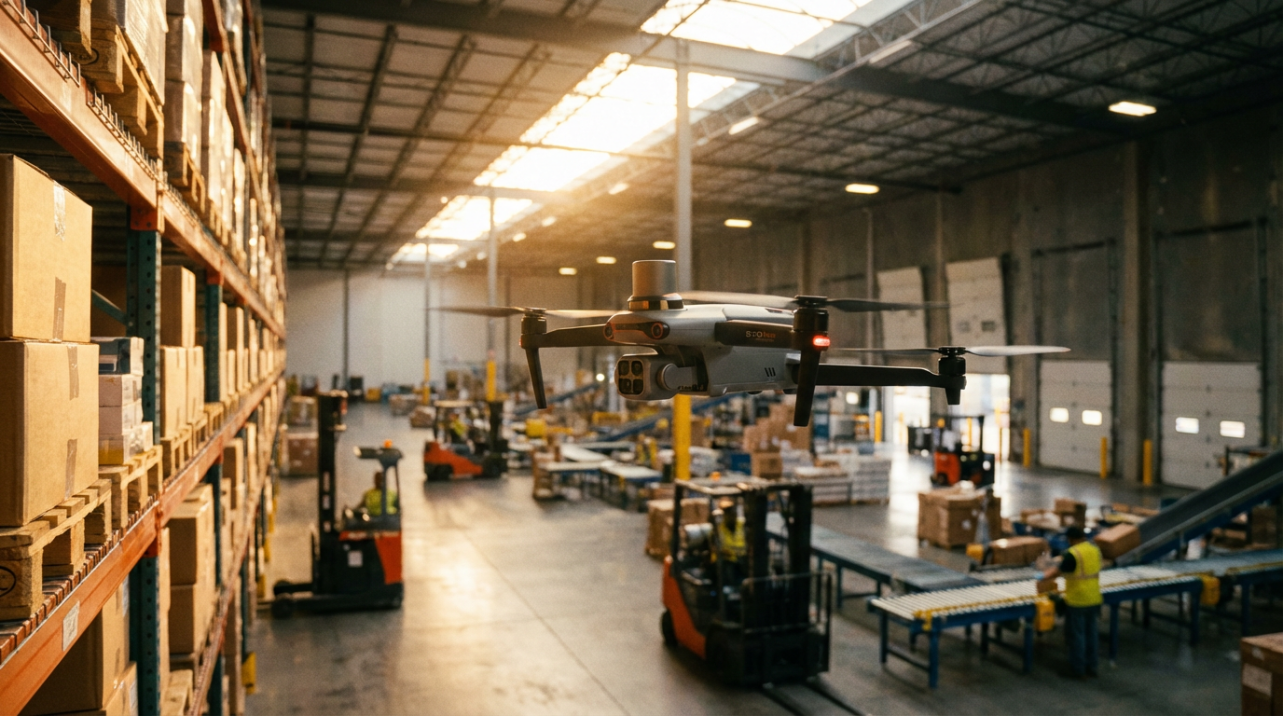
Imagine a drone doing nightly inventory flights in a 100,000 sq ft building. It travels a pre‑planned route, scans every location barcode in a zone, and writes discrepancies directly back into your WMS. Combined with an access control rule that locks the aisles during the scan, you prevent people from moving pallets mid‑flight. The next morning, your team starts with a clean list of real mismatches instead of debating whether the count or the movement was wrong.
Access Control Beyond Door Locks
Modern access control systems are more than door strikes and badges. They define zones, schedules, and permissions in software, and they log every access event with time, location, and user. In a warehouse, those zones might include the controlled substances cage, the cold room, the value‑added services area, and the shipping dock.
When you integrate robots and drones into that same access scheme, you can assign them to zones just like people. A tugging robot might be allowed into main pick aisles and the packing area but not into the pharmaceuticals cage. A drone might have permission to fly in aisles during non‑picking hours only. If an unattended door opens while a high‑value pallet is in motion, the system can pause the robot and alert a supervisor instead of letting the load disappear into a blind spot.
How the Systems Talk to Each Other
The real payoff comes when access control, the WMS, and automation are unified into one information ecosystem, so data flows automatically instead of being re‑typed or exported into spreadsheets How future automation technologies are impacting warehousing. Each access event, robot move, drone scan, and order line becomes part of a single transaction history that you can slice by zone, shift, or worker.
A well‑integrated WMS already tracks inventory, orders, labor tasks, and exceptions in real time, and increasingly uses AI to optimize workflows. When access control and robotics feed into it, you can, for example, compare labor hours inside a regulated cage against the number of lines picked there, flag doors that cause frequent bottlenecks, or automatically pay a freezer differential only for the minutes someone is actually in the cold room, not the full shift.

Operational Benefits You Can Bank On
Automation that is tied to both access control and core warehouse systems typically delivers a familiar set of benefits: more throughput, fewer errors, and better space utilization warehouse automation trends. Adding drones and robots into that integrated setup extends those gains into places that usually stay fuzzy, such as accountability, time attribution, and shrink investigation.
One clear advantage is reduced wasted motion. Goods‑to‑person and automated transport concepts shorten pickers’ walking routes by letting machines cover the long distances while humans stay in ergonomic work zones. In a mid‑size operation where a picker might otherwise walk several miles in a shift, shifting even a quarter of that distance to robots quickly frees up enough time to eliminate at least one overtime shift per week during peak season. Because access control locks and unlocks zones based on robot routes, people are not caught waiting at a closed gate or wandering around to find a side entrance.
Inventory accuracy also improves when drones and robots perform routine counting and scanning, since they repeat the same patterns consistently and do not tire at the end of a long shift warehouse automation optimize operations. When those scans are tied to access logs, you can tell whether an item went missing because of a miscount, a mispick, or an unauthorized entry into a zone. That level of traceability is invaluable during audits and customer disputes, and it reduces the temptation to “fix” problems with manual adjustments that hide root causes.
For payroll and time management, the combination of access events and task data provides a more exact picture of how work translates into hours. Consider a simple example. A worker badges into the mezzanine pick zone at 2:05 PM, completes ten robot‑delivered picks there, and badges out at 2:47 PM. The system knows exactly which orders were touched in that 42‑minute window and which pay rate applies to that zone. You can calculate productivity and apply any premium automatically instead of asking the supervisor to remember who spent how long where at the end of the week.
Here is a concise way to think about the tradeoffs.
Area |
Key benefits |
Potential drawbacks |
Time and throughput |
Less walking, faster picks, shorter cycle counts |
Up‑front setup effort and process redesign |
Inventory and security |
Fewer mispicks, better traceability, reduced shrink |
Requires disciplined data governance and role design |
Payroll and labor |
Cleaner time logs, accurate differentials, fair metrics |
Raises questions about monitoring if communication is poor |

Risks, Costs, and Where Small Warehouses Go Wrong
Automation delivers the strongest return when it focuses on high‑impact choke points rather than trying to automate every inch of the building. Small and mid‑size warehouses often trip up by buying robots or drones first and worrying about integration later. That leads to double data entry, conflicting reports, and operators forced to juggle three or four screens just to answer basic questions.
Capital cost is the obvious concern. Robot fleets, drones that are safe to fly indoors, upgraded networking, and modern access control hardware add up. The key is to view them as part of a single ROI model, not as separate gadgets. If a combination of targeted robots and access‑controlled high‑value zones can eliminate three hours of daily overtime, cut one percent of shrink, and reduce inventory write‑offs, the payback period becomes much easier to justify, even if you start in only one or two aisles.
The less visible risk is poor change management. If operators feel like drones are spying on them and access control logs are only used to hunt for mistakes, adoption will stall. The most successful rollouts treat the technology as a way to prove good performance, protect people from unfair blame, and eliminate tedious work like manual count sheets and handwritten time corrections.

A Practical Roadmap for Getting Started
The strongest starting point is a clear operational problem, not a technology wish list. Pick something concrete, such as lost pallets in a specific cage, constant overtime in one zone, or painful cycle counts on upper racks. Once the problem is clear, map the work as it actually happens today: who goes where, how long it takes, and where information changes hands between systems or paper.
Next, confirm that your digital backbone can support the integration. A capable WMS or inventory system should already track locations, orders, and tasks, while your time and attendance system should handle different pay rules and export clean data to payroll. If these systems do not talk to each other at all, invest first in integration and reporting before adding flying or rolling hardware. Otherwise, every new device just adds noise.
From there, design a small pilot that ties all the pieces together in one controlled slice of your warehouse. For example, let robots shuttle totes between a single picking aisle and a packing station, use drones to count that aisle overnight, and apply access control rules so only trained staff and authorized machines enter the area. Track not just speed and accuracy, but also how many manual time corrections disappear, how often you refer to the audit trail to resolve issues, and whether supervisors spend less time walking and more time coordinating.
Finally, refine the labor and payroll rules around what the data is telling you. If the logs show that people spend only 30 minutes per day in a premium zone, adjust pay policies so differentials are based on actual minutes spent there instead of rough estimates by shift. Share those findings with your team, both to build trust and to uncover practical improvements that only front‑line staff will see.
Short FAQ
Are drones and robots only realistic for big warehouses?
Drones and robots are most visible in giant fulfillment centers, but the underlying automation trends are increasingly accessible to smaller operations as technology costs come down and cloud tools simplify integrations warehouse automation statistics and trends. For a smaller site, a handful of robots in the busiest aisles, paired with smarter access control and a solid WMS, often delivers more value than a large fleet spread thin across the whole building.
How does this help with payroll accuracy, not just productivity?
When every zone entry, robot task, and inventory move is time‑stamped and tied back to an order, you get an automatic diary of the shift instead of relying on memory or manual notes top warehouse automation trends shaping the future. That means fewer disputes about who was where, cleaner application of premiums and overtime rules, and less manual adjustment by supervisors at the end of the week.
What is the biggest mistake to avoid?
The biggest mistake is treating drones, robots, and access control as separate projects instead of one integrated operational redesign. Start with the data connections and process changes you need, then choose hardware that fits that design; otherwise you end up with impressive machines feeding bad or incomplete information into payroll and planning.
In the end, the goal is simple: fewer surprises, less chasing, and cleaner numbers. If every door swipe, robot move, and drone scan lines up with how you pay people and promise customers, your warehouse becomes easier to run, not more complicated. That is when automation stops being a science experiment and starts being a quiet, reliable workhorse in the background of your operation.


Share:
Coworking 3.0: Automated Zone Access Based on Membership Tiers
Modular Upgrade Trends: Why “All-in-One” Boxes Are Yielding to Scalable Components