
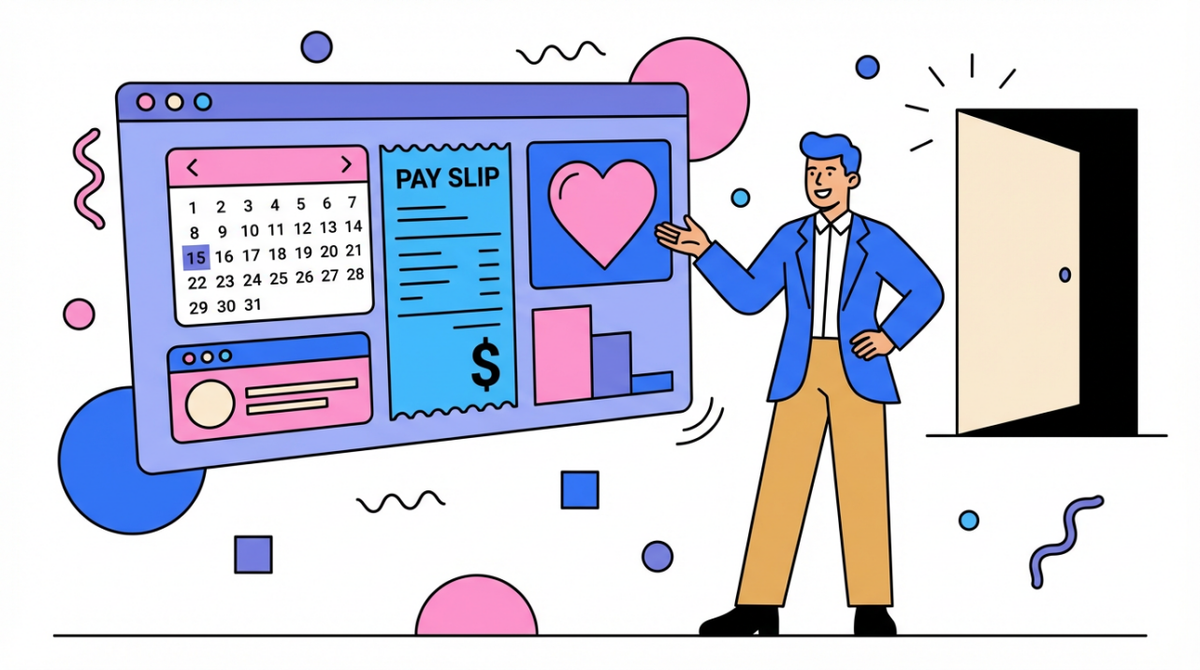
When wellness tools are woven into the same systems employees already use for time, scheduling, and pay, they feel like genuine support instead of surveillance, building trust, usage, and real well-being outcomes by 2026.
Picture this: an employee just wants to check their hours and pick up an extra shift, but instead they bounce between three logins, a clunky wellness portal, and a reminder that their smartwatch data feeds into some “health score.” It does not feel caring; it feels like being checked up on. In operations reviews with small and mid-sized companies, the same pattern keeps showing up: plenty of wellness offerings, but low trust, low usage, and constant complaints about feeling watched. The good news is that by 2026, the playbook is clear enough that you can build a setup where people feel supported, not surveilled, and this article walks through how to do it and what tradeoffs to watch.
Why So Many Wellness Efforts Feel Like Surveillance
Despite a boom in wellness tools, many employees largely ignore them. Gartner data cited by Harvard Business School’s Working Knowledge shows that while about 87% of employees have access to mental and emotional well-being offerings, only 23% actually use them. At the same time, a U.S. Department of Health and Human Services survey reported that 84% of workers say workplace conditions contributed to at least one mental health challenge, summarized by Harvard Extension. People are hurting, the tools are there, and still they stay away.
The way many programs are built explains the gap. The WellSteps engagement research describes “hollow engagement”: employees go through the motions to win a discount or avoid a penalty, without real behavior change. One case showed high participation driven by a steep monthly insurance penalty but almost no improvement in health outcomes or costs. From an employee’s perspective, that kind of design is the definition of being monitored: steps, logins, or screenings become boxes to tick so they do not get punished.
Traditional program design also adds friction everywhere. Separate portals, special passwords, forms to authorize data sharing, and wellness tasks that happen outside the normal workday all signal, “This is extra, and we are tracking it.” Harvard’s wellness program analysis notes that many offerings are “set it and forget it” benefits employees cannot realistically use, often bolted onto already long days. Combine that with wearable tracking and data dashboards described by CoreHealth and HealthyWorkplaces at UC Berkeley, and you get a predictable reaction: people feel like the product, not the customer.
For operations leaders, the key insight is simple and sharp. The more steps you add, the more it feels like compliance. The more data you pull without clear value and guardrails, the more it feels like surveillance. Fixing that is less about buying new tools and more about removing friction and changing how tools show up in everyday work.
What “Frictionless Access” Really Means
Workplace designers use “friction” to describe the small roadblocks that add up to big stress. WorkDesign’s “Hive” concept frames friction as anything that increases resistance in daily life, from hunting for a conference room to juggling childcare and work in separate locations. In a similar vein, Aura Office talks about a “frictionless hybrid office” where technology and physical space let people move seamlessly between remote and in-office work.
In the digital workplace, Edume describes frictionless access as centralizing tools and information in one place so employees are not constantly switching systems or chasing instructions. Deloitte highlights Hilton’s move to a single mobile entry point for HR, collaboration, and well-being tools with one login. Motion Connected recommends integrating wellness platforms into everyday HR tasks like time-off requests so people naturally bump into wellness resources without going out of their way.
Put simply, frictionless access means employees use the same familiar door for everything important: checking schedules, clocking in, viewing pay, and getting wellness support.

There are fewer passwords, fewer clicks, and fewer awkward handoffs between systems. Done right, wellness becomes another feature of work tech, not a separate “wellness surveillance” stack.
Here is how the difference plays out in practice:
Aspect |
Friction-heavy wellness |
Frictionless, supportive wellness |
Access |
Separate portal, new password, off-hours webinars |
Same app as schedules, time, and pay; one login; on-demand, short resources |
Data use |
Vague “for your health,” tied to insurance penalties |
Clear, written rules; aggregate data only; no link to performance ratings |
Employee control |
Must opt out; unclear how to stop sharing |
Opt in; easy to see and change what is shared and with whom |
Manager behavior |
Reminds people to complete “required” wellness tasks |
Models healthy use; encourages boundaries and treats wellness as support, not test |
Once you shift to that second column, the emotional tone changes. Employees stop asking, “Why are you watching me?” and start asking, “What can I use here that actually helps me?”
How Frictionless Access Reduces the Feeling of Being Monitored
Integration: Wellness Lives Where Work Already Happens
CoreHealth shows how digital wellness platforms can centralize fitness, therapy, and telehealth in one interface, which is especially valuable for remote and hybrid workers. Motion Connected goes further and advises integrating wellness hubs into routine HR workflows, for example, using the same platform for time-off requests and wellness challenges so employees log in regularly without extra effort. Edume and The Access Group both emphasize single digital workspaces where communication, workflows, and training all live together.
When wellness lives in the same place as scheduling, timekeeping, and payroll, employees do not feel singled out. Opening an app to check overtime and seeing a short stress-management video on the home screen feels normal. Being asked to log into a separate “health platform” does not.
Managers also do not need to chase people. Instead of supervisors nagging employees to “complete your wellness task,” automated nudges inside existing tools handle reminders, and employees can act when it suits their day.
A practical example from the small-business world is a time and attendance system that, when employees clock out, offers two simple options: review today’s hours and tap into a two-minute micro-lesson on recovery or sleep. Nobody has to install a new app, and there is no special report on who watched what. Over time, that kind of seamless access builds trust and usage without feeling like a test.
Transparency and Control Over Data
The feeling of being monitored is mostly about two things: not knowing what is being collected and not having any say in how it is used. Deloitte’s guidance on integrating well-being and technology is blunt about the need for legal and privacy safeguards and for solutions that are opt-in and configurable. HealthyWorkplaces at UC Berkeley stresses that technologies gathering health-related data should be designed around worker autonomy, not just employer analytics. Calendar.com’s productivity analysis flags data and privacy as key risks that can erode trust if mishandled.
To reduce the surveillance vibe, operations and HR leaders need to separate wellness data from performance or pay decisions and say that out loud. Time and attendance information obviously must be precise for payroll and compliance. That is non-negotiable. But whether someone joins a meditation session, participates in a step challenge, or completes a mental health module should not show up in performance reviews.
A simple, concrete practice is to promise three things in writing, then follow through. First, only aggregate wellness data at team or department level for trend tracking. Second, any individual-level health or behavior data stays between the employee and the wellness provider or coach. Third, employees can change sharing settings or opt out completely without penalty.
When employees see you respect these boundaries and when the tools you choose make those choices visible and easy, the same wearable or app that once felt like a tracking device starts to register as a personal aid.

Removing Micro-Frictions That Read as “Checkups”
WorkDesign’s friction concept is powerful because it highlights how seemingly tiny annoyances carry meaning. Every extra login, manual form, or manager approval around wellness signals, “We are watching your choices.” The Access Group shows how consolidating tasks and documents in an AI-powered assistant can reduce admin noise and burnout risk. Calendar.com warns that information overload and constant connectivity drive stress and the sense of being overworked.
In real workplaces, that looks like cutting back on manual wellness sign-offs and instead letting participation be automatically recorded inside the platform, with employees in control of what is visible.
It also means switching from multiple, fragmented notifications to a single, scheduled summary, especially outside of core hours, echoing Deloitte’s and Rocket Health’s advice to counteract “always-on” expectations.
You can even use technology to support rights similar to Australia’s legislated “right to disconnect,” described by The Access Group, by setting default quiet hours when non-urgent wellness or HR notifications simply do not go out.
Each micro-friction you remove does double duty: it saves time and quietly tells employees, “We trust you to manage your own well-being.”
Implementation Playbook for 2026: From Monitored to Supported
Map the Employee Journey Around Time and Pay
Start where employees already care deeply: their time and their paycheck. Harvard Extension and Berkeley’s HealthyWorkplaces both underline how poor well-being and burnout drive absenteeism, turnover, and productivity losses, with presenteeism alone estimated at around $12,000 per employee per year. Meanwhile, Edume notes that 92% of workers say effective tools influence their satisfaction and that deskless employees who feel properly equipped are far more likely to stay.
If your time and pay journey is clunky, employees will assume any added wellness tech is more of the same. Map every step from clocking in to seeing a paycheck: how people view schedules, swap shifts, request time off, and check benefits. Then note where they currently encounter wellness: maybe a poster in the break room, a buried link on an HR page, or emails nobody reads.
Even in a ten-person shop, if each person burns just ten minutes a day wrestling with fragmented systems, you are losing almost eight hours a week, essentially a full extra shift. Fixing those friction points is not just “nice for wellness”; it is core operations work that pays off in both morale and margin.
Design Your Tech Stack Around Three Rules
One clear door, voluntary participation, and built-in boundaries go a long way.
First, aim for one primary entry point. Echoing Aura Office, Edume, and Deloitte’s Hilton example, consolidate HR, time, and wellness access into a single app or portal with one login. For a small business, that often means choosing a payroll or scheduling system that already includes a benefits and well-being hub or integrates cleanly with your provider. You do not need the fanciest platform; you need the least fragmented one.
Second, keep wellness opt-in and inviting. Motion Connected’s fieldwork shows that positive, “you get to do this” messaging drives more sustainable engagement than compliance-oriented language. WellSteps’ model warns that heavy penalties create hollow engagement. CoreHealth’s experience with digital coaching demonstrates that personalized, accessible support beats one-size-fits-all campaigns. In practice, that means offering modest rewards, recognition, or schedule flexibility for participation but never tying wellness completion to disciplinary processes.
Third, set and enforce tech boundaries by default. Deloitte and Rocket Health both highlight how remote work tools blurred lines between work and home, feeding burnout. The Access Group points to technology’s role in supporting legal “disconnect” expectations. You can hardwire boundaries by muting non-essential notifications outside core hours, using digest summaries instead of real-time pings, and making it explicit that there is no expectation to respond to wellness or HR nudges after a set time in the evening.
When people see wellness opportunities appearing inside the tools they already use, framed as choices with clear boundaries and no hidden hooks, the feeling of being monitored fades and the sense of being supported grows.
Pros and Cons of Frictionless Wellness Tech
The upside of frictionless access is real and measurable. The Global Happiness Council and Deloitte link well-being to higher productivity, profitability, and retention. CultureMonkey, drawing on Gallup’s research, notes that highly engaged companies see about 23% higher profitability than low-engagement peers. UC Berkeley’s HealthyWorkplaces estimates that most productivity loss comes from presenteeism, not absenteeism, and puts the cost around $12,000 per employee per year. Edume reports that digitally empowered employees can drive additional revenue and are more likely to stay, especially frontline and deskless workers. O.C. Tanner finds that flexibility and control over when and where people work significantly increase engagement and intent to stay.
On the operations side, a well-integrated tech stack also tightens time and payroll accuracy. When attendance, scheduling, and wellness resources share the same data spine, you reduce double entry and manual corrections. Automation and AI, described by The Access Group and Calendar.com, can trim low-value admin work so managers spend more time on coaching and one-on-ones, which Harvard Extension identifies as pivotal for well-being and retention.
There are downsides and risks, and they matter. Calendar.com flags information overload, overreliance on tools, and data and privacy concerns. Deloitte cautions that many organizations call well-being a priority but are not ready to measure its impact or manage the ethics of well-being data. Rocket Health warns that without clear boundaries, the same tech that enables flexibility fuels an “always-on” culture. WellSteps reminds us that incentives can backfire by creating hollow engagement if you never transition from external rewards to intrinsic motivation.
The fix is not to avoid technology but to govern it like any other critical operation. That means involving employees in selecting and configuring tools, being honest about which wellness offerings actually get used, as Harvard’s wellness program analysis recommends, and being willing to retire programs or apps that add confusion without clear benefit.
Short FAQ
How will you know employees feel less monitored, not more?
Look beyond participation counts. Watch anonymous pulse surveys for items on trust, psychological safety, and perceived fairness. Monitor complaints about apps and monitoring in one-on-ones and exit interviews. If usage of optional wellness features rises while negative comments about “being watched” drop, you are moving in the right direction.
Can a small business really afford this kind of setup?
Most of what matters here is design, not budget. Many payroll and time systems used by small companies already include employee self-service, document storage, and basic well-being content. By choosing one primary system, simplifying access, and tightening privacy rules, you can get most of the frictionless benefits without a major spend. Over time, even modest reductions in turnover or time spent fixing timecards offset the effort.
What is the most impactful first step over the next quarter?
Map how people currently get to time, pay, and wellness resources, and consolidate access as much as your existing tools allow. Then publish a short, plain-language statement on what you track, why, and what you will never do with wellness data. That combination of easier access and explicit boundaries is usually enough to start shifting the mood from “they are checking up on me” to “they are trying to make this easier.”
A frictionless wellness strategy is not about hiding monitoring; it is about making support so easy, transparent, and respectful that employees no longer see wellness tech as a spotlight on their behavior. Fix the friction, and you not only protect well-being but also sharpen the entire operation, from time management to payroll accuracy and beyond.
References
- https://healthyworkplaces.berkeley.edu/health-technology-workplace-leveraging-technology-protect-and-improve-worker-health-0
- https://www.library.hbs.edu/working-knowledge/employee-wellness-programs
- https://extension.harvard.edu/blog/6-management-tips-for-supporting-employee-wellbeing-at-work/
- https://pmc.ncbi.nlm.nih.gov/articles/PMC10240075/
- https://gradadmissions.scranton.edu/blog/articles/human-resources/improving-employee-engagement.shtml
- https://www.shrm.org/topics-tools/tools/toolkits/designing-managing-effective-wellness-programs
- https://auraoffice.ca/blog/achieving-a-frictionless-hybrid-office-environment
- https://www.tskgroup.co.uk/ideas/designing-a-frictionless-workplace-experience
- https://www.deskbird.com/blog/workplace-technology-trends
- https://www.edume.com/blog/importance-of-technology-in-the-workplace


Share:
The End of “Forgot-My-Card” Anxiety: How Biometrics Rescue Forgetful Staff
Office Design Trends 2026: Why Minimalism Rejects Bulky Time Clocks