
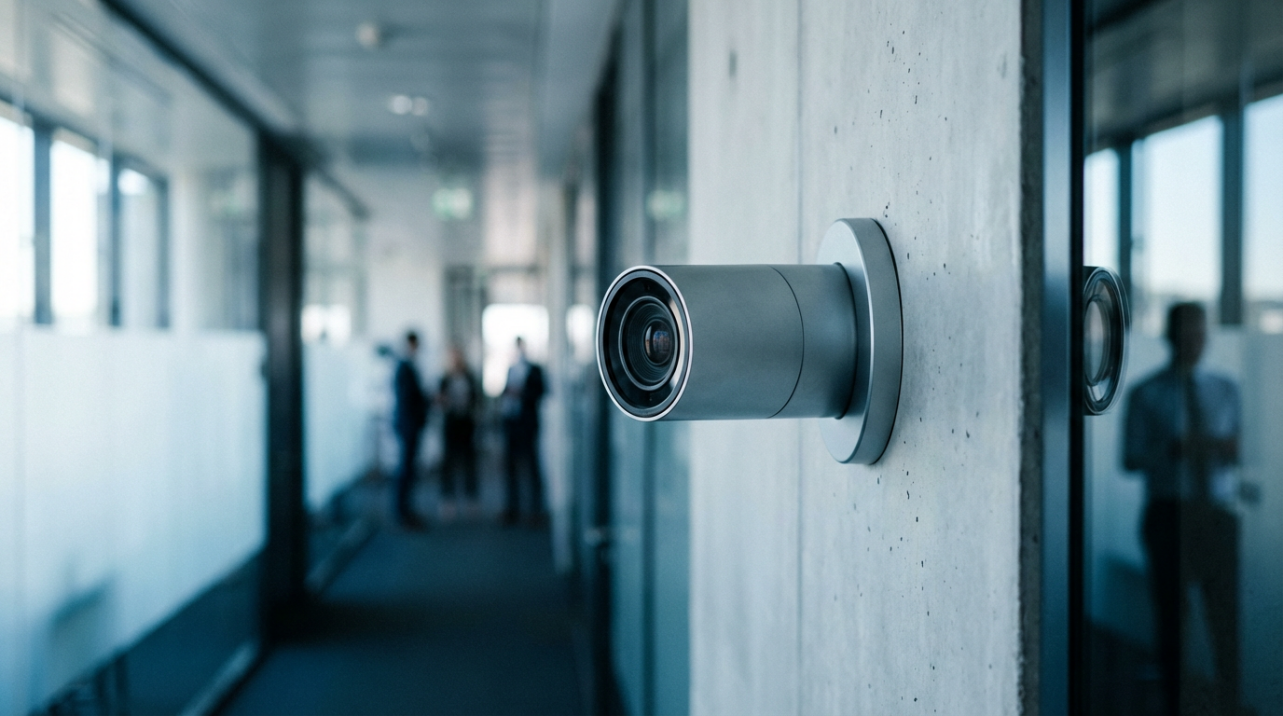
You have a vendor in your lobby promising "no-cost cameras and access control" if you just sign a long-term monitoring contract, and you are thinking about cash flow, payroll, and shrink all at the same time. The offer can feel like a gift when you are stretching every dollar and still trying to keep people, product, and time clocks safe. These deals can work, but only if you treat them as critical system decisions, not freebies. This article breaks down how the "free hardware" trend really works, how much security providers may start to resemble cell phone carriers, and the checkpoints that protect your budget, data, and schedule.
The "Free Hardware" Pitch, Translated Into Plain English
In security, "free hardware" usually means the provider installs cameras, access readers, panels, and sometimes network gear with little or no upfront cost, then earns the money back through a multi-year contract for monitoring, cloud storage, analytics, and support. Instead of writing a big check once, you pay a higher recurring bill for years.
Industry trends point directly toward this service-heavy model. The Security Industry Association's Security Megatrends analysis notes that the security hardware layer is being reinvented. End-to-end solutions and value-chain thinking are replacing the old, transaction-heavy channel model, and technology refresh cycles are speeding up at the same time. When providers own more of the stack and lifecycle, bundling hardware into the monthly bill is a natural next step.
Customer demand is moving the same way. Research on top security technology trends security technology trends shows that unified, cloud-based systems are quickly becoming the default. More than nine in ten organizations already run parts of their security in the cloud, and many report fewer incidents when a single provider covers most security needs. Centralized platforms that tie together access control, video, intercoms, and radios give teams one hub to manage incidents and operations instead of juggling separate tools. Those trends make it easier for providers to bundle the whole experience behind one recurring line item.
How It Mirrors Your Cell Phone Plan
The pattern is familiar. With your cell phone, you often get a heavily discounted or "free" device as long as you sign a multi-year plan. The carrier recovers the device cost and its profit over the life of that contract. In return, you get predictable monthly charges, integrated services, and a device that is tightly bound to that ecosystem.
Security providers pursuing ecosystem-first strategies are following a similar playbook. Some camera manufacturers position their platforms almost like operating systems, encouraging customers to choose a single ecosystem and then stay inside that universe for cameras, software, sensors, and analytics. Others emphasize open but centralized platforms where video, access, intercom, and analytics all run under one pane of glass.
In practice, that can mean cameras and readers that only work with the provider's own management software, contracts with steep early-termination fees, and hardware that is difficult or uneconomical to reuse if you ever decide to switch. The parallels with a carrier-locked phone are very real.

The Real Costs Behind "Free" Cameras And Panels
To see whether the deal really helps your operation, you have to convert the pitch into total cost over time. Imagine, as an example, that buying cameras, readers, and a recorder outright would cost about $15,000. A "free hardware" offer might drop that upfront payment close to zero but set your monthly service fee at $500 for seven years. Over the contract, that is $42,000 in service payments. If a comparable monitoring and cloud package without subsidized gear would cost $250 per month, then you are effectively paying an extra $250 per month, or $21,000 over seven years, to finance that hardware.
Now layer in how fast security technology is changing. Industry forecasts, including Security Megatrends reports and recent security technology trends research, emphasize that AI, on-device processing, and hybrid edge-cloud architectures are reshaping what cameras and recorders can do and pushing organizations to refresh technology more often. Camera manufacturers are already shifting more analytics and intelligence to the edge, reducing the need for heavy server infrastructure and enabling smarter search and insights. If you are locked into last-generation gear for most of a decade because of your contract, you may miss out on capabilities that genuinely improve operations and staffing efficiency.
Security is not just about features; it is also about keeping the hardware itself safe. Hardware-focused cybersecurity experts point out that roughly 63% of organizations experienced at least one data breach in a recent year tied to hardware security vulnerabilities, underscoring that the physical layer is no longer an afterthought cybersecurity hardware. When devices age out, they often stop receiving firmware and microcode updates, leaving known vulnerabilities permanently exposed hardware updates in cybersecurity. The World Economic Forum has similarly argued that hardware and chip-level weaknesses can undermine every software defense stacked above them, especially in complex, global supply chains where malicious modifications are hard to detect hardware is under cyberattack.
If a "free" hardware deal keeps you on unsupported cameras, controllers, or firewalls for years because upgrades are not baked into the contract, you may pay for it later in downtime, risk, and overtime hours spent cleaning up incidents.
Operational Upsides You Actually Feel Day To Day
When these carrier-style deals are designed well, they can take real pressure off your team. Cloud-managed security platforms allow you to monitor multiple locations, review incidents, and change access rights from a single dashboard or even a phone, which is a big improvement over driving to each site to pull footage or reprogram doors. Modern systems increasingly unify video, access, and alarms, so the same infrastructure that catches an intruder can also surface occupancy trends, unsafe bottlenecks, or underused spaces.
Cloud-first access control and video platforms already run in the cloud for most organizations, making it easier for lean operations teams to manage hybrid work, multiple buildings, and shifting schedules without constant on-site visits. When a provider bundles hardware, cloud services, and support, your staff makes one call instead of chasing several vendors, and that saves hours that can go back into scheduling, payroll reconciliation, or customer service.
The Tradeoffs And Hidden Friction
The flip side is control. Long-term, bundled contracts reduce your ability to shop the market or negotiate better terms when your needs change. Cutting-edge security can be costly to deploy, especially for smaller organizations, which can create uneven protection and make it harder to adopt new solutions quickly. If your provider decides not to prioritize a feature or an upgrade that matters to you, there may be little you can do until the contract is up.
There is also risk when you outsource all hardware decisions. Hardware-level security is now a frontline defense, particularly in industrial and critical infrastructure environments where failures can halt operations. Combined hardware and software defenses are more effective than either layer alone, but only if someone is accountable for maintaining both. If your contract leaves firmware patching, device hardening, and hardware refresh in a gray area, you might assume the provider is handling it while they assume it is your IT team's problem.
Finally, lock-in can creep into your data just as much as your devices. Cloud-based security brings major benefits, but you must be clear about who owns video and access logs, how long they are retained, and what it will cost to export them if you ever move to another provider. For a business that uses security logs to support investigations, compliance, or audits of time and attendance, losing easy access to that history is a real operational cost.
Will Security Providers Eventually Operate Like Carriers?
Looking at the trends, many providers are likely to behave more like carriers, especially in small and mid-size markets, but it will not be universal.
On the supply side, the economic incentives are strong. Security integrators and manufacturers are already gravitating toward managed services and recurring revenue models that shift customers from large capital purchases to ongoing service engagements, a move industry leaders describe as necessary to stay competitive. Security Megatrends research emphasizes end-to-end solutions and "one-logo" approaches where a single brand or value chain delivers most of the experience. Cloud adoption is high, and unification of physical and cyber security is accelerating according to recent security technology trends reports. Those dynamics align with bundling hardware into long-term service contracts.
On the technology side, the shift to AI, edge computing, and advanced analytics makes it more practical for providers to own and operate fleets of smart devices rather than simply selling boxes. Camera makers describe a future where each new device brings its own compute power, improving performance and enabling richer system-wide analytics. Others highlight "physical AI" sensors that detect vape aerosols, aggression, or air quality and feed data back to both security and building operations. These capabilities are easier to deploy and maintain as ongoing services than as one-off hardware purchases.
But there are limits. In high-sensitivity sectors such as energy, utilities, and critical infrastructure, hardware security is treated as non-negotiable, and organizations are urged to choose best-in-class, hardware-backed protections rather than chase the lowest upfront cost. Policymakers also worry that regulatory frameworks and cost pressures may slow the deployment of some advanced security technologies, which could keep more traditional ownership models in place in certain environments.
For most small and mid-size businesses, though, it is reasonable to expect more carrier-style offers over the next few years: bundled hardware, long-term contracts, and ecosystems that promise to "just take care of it" for a monthly fee.
A Practical Checklist To Decide If A Free Hardware Deal Is Right For You
You do not need to guess. You can walk through a few focused questions and reach a clear, defensible decision for your operation.
Question 1: How Critical Is This System To Running Your Day?
If your cameras and access control are primarily there to deter theft and review occasional incidents, you have more flexibility. If, instead, the system supports opening and closing routines, access to cash or inventory rooms, or investigations that feed into HR and payroll decisions, then it is closer to core business infrastructure.
Unified security platforms increasingly double as operational tools, turning sensor and occupancy data into insights about how spaces are used. Access control for hybrid work is also a leading trend, with organizations relying on security systems to manage who comes in when and to understand attendance patterns. If you plan to lean on these systems for time, attendance, or compliance decisions, signing away control without strong uptime, support, and data retention guarantees is risky.
When the system is mission-critical to operations, a "free hardware" deal is only acceptable if the contract spells out response times, replacement timelines, and clear accountability for keeping devices supported and secure.
Question 2: How Much Vendor Lock-In Can You Tolerate?
Some lock-in is inevitable; the goal is to make it tolerable. Providers themselves acknowledge that security is increasingly bought as an ecosystem choice, much like picking an operating system. At the same time, leading vendors advocate for open platforms that integrate new tools without ripping out existing infrastructure.
When evaluating a free hardware offer, ask simple, practical questions. If you part ways with this provider in five years, can another company reuse the cameras, readers, and cabling, or will most of it end up in a storage room? Does the platform support standard protocols and open APIs that others can connect to? Is video stored in a format you can export at scale?
A useful compromise for many operations is a hybrid approach: accept subsidized devices where being in the ecosystem truly adds value, such as AI-capable cameras, while insisting on standards-based or clearly reusable hardware for basics like electric locks and door hardware.
Question 3: Who Owns Hardware Security And Updates Under The Contract?
Carrier-style security only works if someone owns the hardware lifecycle. Hardware-level security now covers secure boot, tamper resistance, and one-way data flows in critical environments, and it is increasingly recognized as a frontline defense. Studies emphasize that when hardware ages out and stops receiving updates, known vulnerabilities accumulate and create an easier path for attackers. The World Economic Forum stresses that weaknesses in chips and device supply chains can undermine every software safeguard and are difficult to remediate once embedded.
In a free hardware deal, you want written answers to plain questions. Who is responsible for applying firmware updates, and within what timeframe after a release? How long will each model of camera, reader, or firewall receive security support? What triggers a proactive replacement, and who pays for labor? Are devices equipped with modern protections such as secure boot and signed operating systems, which some manufacturers now use to treat edge devices as a strengthening element rather than a weak point?
Without those commitments, you risk carrying the downside of ownership without the control.
Question 4: How Often Do Your Sites And Needs Change?
Some operations barely change their footprint for a decade; others open, close, and reconfigure locations constantly. Modern security options include mobile surveillance units and solar-powered, trailer-based systems that can be deployed temporarily for construction, events, or high-risk areas. Advanced sensor networks also support changing occupancy patterns and dynamic space usage.
If you have a stable footprint and predictable operations, a long-term contract can make sense as long as the economics and security posture are right. If you frequently add or move sites, or you rely on temporary yards, pop-up locations, or seasonal operations, you will want a contract that lets you redeploy hardware, adjust volumes, and scale down without punitive fees. Otherwise, you may pay for gear that sits idle or spend time negotiating exceptions instead of running your business.
Comparing Ownership Models At A Glance
A simple way to summarize your options is to look at how different models affect cash, flexibility, and control.
Model |
Upfront cash |
Monthly spend |
Typical contract length |
Hardware refresh responsibility |
Vendor lock-in |
Best fit when |
Buy hardware, light services |
Higher |
Lower |
Short or cancelable |
You plan and fund upgrades |
Low to medium |
You have stable needs, some IT support, and want maximum flexibility. |
"Free" or heavily subsidized hardware |
Low |
Higher |
Longer, often multi-year |
Provider refreshes under contract terms |
High |
You prefer predictable cash flow, want a single provider, and can live with lock-in if service is strong. |
Hybrid (mix of owned and bundled) |
Medium |
Medium |
Medium, with more options |
Shared, based on component type |
Medium |
You want some ecosystem benefits but still keep critical pieces portable and standards-based. |
None of these is automatically right or wrong. The key is aligning the model with how your business actually runs and how much operational risk you are willing to carry.

How To Negotiate A Carrier-Style Security Deal Without Regretting It
Once you decide that a free hardware offer might fit, treat the negotiation like any other business-critical service, not like accepting a free gadget.
Start by getting a complete asset list with model numbers, support end dates, and which components are covered for replacement or upgrades. This mirrors best-practice recommendations to keep a hardware inventory with vendor, firmware, and lifecycle information so that you can prioritize upgrades before devices become unsupported. Next, push for clear service levels around monitoring, remote support, and on-site response, and tie these to your actual operating hours; a restaurant, a warehouse, and a clinic have very different peak times and critical windows.
Then move to data and exit terms. Clarify ownership of video and access logs, how long data is retained by default, and what it costs to export large volumes of footage if you change providers. Ask for an exit clause that specifies what happens to the hardware: whether you can buy it out at a known price, whether it must be removed, and who pays for that work.
Finally, remember that people remain part of the system. Even with advanced analytics, remote monitoring, and physical AI sensors, effective protection still depends on guards and staff who communicate clearly, stay vigilant, and act with both confidence and compassion 5 C's every security guard should have. A good contract will spell out not only the technology but also the human response your team can expect.
FAQ
Is free security hardware ever really free?
The device itself may be free at installation, but the cost is usually built into higher monthly fees over a multi-year term. When you add up all payments, you are effectively financing the hardware through your service bill. The deal can still be worthwhile if the provider delivers strong security, keeps hardware up to date, and gives you capabilities you could not easily manage alone, such as predictive analytics and unified multi-site management.
How often should security hardware be refreshed?
There is no single schedule, but trends point toward more frequent refresh cycles as AI, edge computing, and new threats evolve. What matters most is staying within the supported lifecycle of your devices so they continue to receive firmware and microcode updates. If a contract locks you into equipment that will be out of support long before the term ends, that is a red flag.
Will AI and biometrics make these carrier-style models more common?
Yes, they are likely to push more providers toward bundled, service-heavy offers. Research shows strong interest in AI-driven analytics and biometric access control over the next few years. These capabilities rely on tight integration between devices, cloud services, and software, which aligns well with recurring, ecosystem-based business models. The more advanced the features, the more it makes sense for providers to wrap hardware, software, and updates into a single subscription.
Final Word: Don't Chase "Free"; Chase Control
Carrier-style "free hardware" is coming to security, and in many sectors it is already here. If you translate the offer into total cost, insist on clear responsibility for hardware security and updates, and protect your data and exit options, you can use these models to reduce upfront spend and simplify your security stack without handcuffing your operations. The goal is not to get a free camera; it is to buy yourself fewer surprises, tighter control, and more time to run the rest of the business.


Share:
Security Budget Trends 2026: The Shift from CapEx to OpEx
IoT Botnet Threats: New Attack Trends Facing Smart Access Systems in 2026