
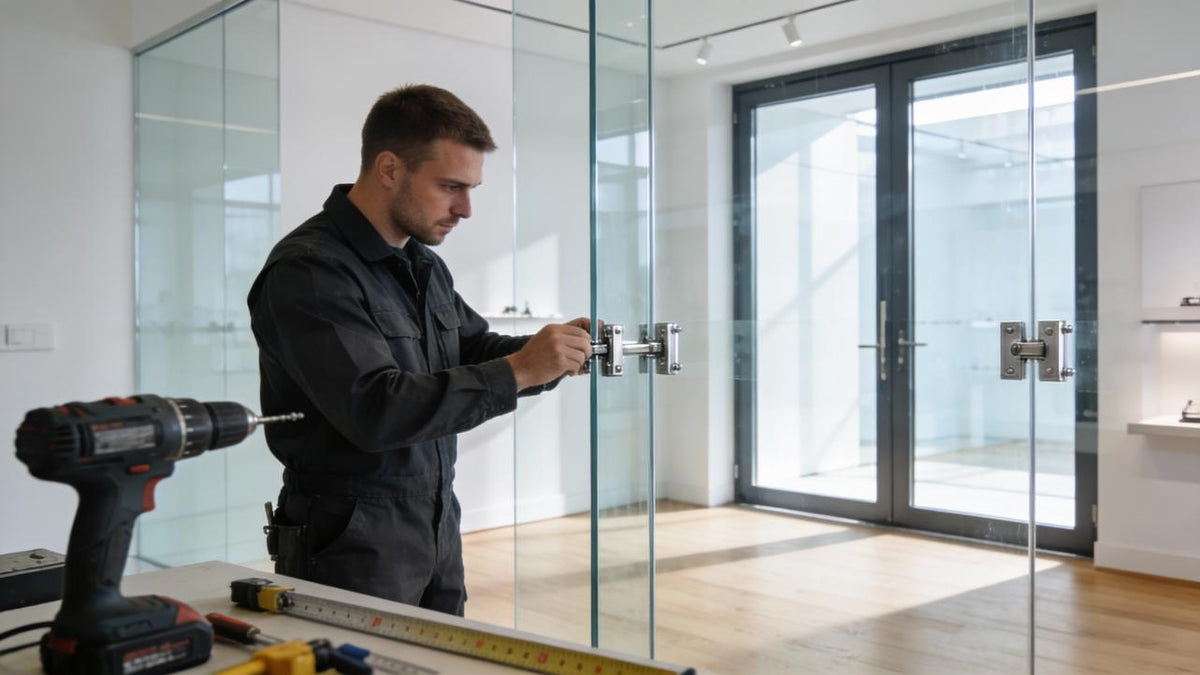
For most small offices, clamp-on glass brackets give you faster, more flexible installs, while drilled-through hardware delivers a cleaner, more permanent look and higher durability for busy entrances; the right choice comes down to downtime, reconfiguration plans, and how hard the door will be used.
Bracket Systems vs. Drilled-Through Hardware
Most office glass doors use either clamp-on bracket systems or drilled-through fittings. Well-specified glass brackets can safely support heavy tempered panels while keeping the hardware visually light.
Bracket systems clamp around the glass with rubber or plastic gaskets, then fasten to a wall, header, or floor. You avoid holes in the glass and can mix clip brackets, U-channels, and pivot brackets for swinging or sliding doors.
Drilled systems rely on holes cut in the glass before tempering and use patch fittings, door rails, and standoffs to clamp through the glass. Industry references for heavy glass doors treat these as standard structural setups. You get a very clean "all-glass" look with less visible hardware.
In practice, brackets usually show more metal and feel a bit more technical, while drilled fittings look more seamless but demand higher precision and planning.

Schedule, Downtime, and Flexibility
From an operations angle, the first question is simple: how many hours can this entrance or conference room be offline before it starts burning overtime and rescheduled meetings?
Bracket installs are generally faster and more forgiving. Once blocking is in place, a crew can often hang a typical 3/8-inch tempered interior door panel of about 60–65 lb in a single visit, as long as the opening is plumb and the track or pivots are correctly rated as in standard guidance for installing glass doors. Panel glass typically runs around 35 per sq ft, so fixing mistakes with brackets usually means reworking anchors, not buying new glass.
Drilled systems push more of the work to the front end: you must measure once, measure again, then order glass with exact hole locations because tempered panels cannot be drilled or trimmed later. Professional installation tips for glass door hardware stress that misaligned holes are a non-starter.
Operationally, brackets win when you expect floorplan changes—moving a door a few inches or repurposing rooms—because you can often reuse the glass and most hardware. Drilled systems shine when the layout is stable for years and you are willing to trade flexibility for a sleeker, "installed once, live with it" feel.

Safety, Security, and Maintenance
Both options live or die on basics: fully tempered safety glass, hardware matched to glass thickness, and proper load margins for the size and weight of the door.
Bracket systems concentrate load at clamp points, so gaskets and torque matter. Tighten screws evenly in several passes and stop at firm contact instead of muscling them down; the same logic as carpentry warnings about over-tightening screws applies here, because excess pressure can chip or crack tempered glass.
Drilled fittings spread load around through-glass holes with bushings and larger contact patches, which is why they are common on busy lobby doors that take thousands of cycles a week. The tradeoff is that a crack starting from a hole usually means replacing the whole panel.
On security, the door is only as strong as its glass. Commercial guidance on door security best practices emphasizes layering: better locks, reinforced frames, and impact-resistant glazing work with either brackets or drilled fittings.
Well-engineered bracket and drilled systems can both be safe; the real risk comes from undersized hardware, sloppy installation, or skipping inspections, not from the attachment style itself.
Decision Guide for Small Offices
Here is a quick, practical way to choose for a typical small office:
- Pick clamp-on brackets if you want fast installation, minimal downtime, and the option to relocate doors during a future re-stack.
- Pick drilled hardware if this is a showcase entrance where ultra-clean sightlines and a built-in feel matter more than flexibility.
- Choose brackets for sliding office fronts where you might later add soft-close hardware or reconfigure panels; you are mostly reworking tracks and anchors, not buying new glass.
- Pair either system with better glazing and locking if break-ins are a concern, taking cues from practical sliding door security strategies like secondary locks and stronger glass.
- In all cases, align visible metal with your overall door hardware materials so your corridors look intentional, not pieced together.
If your installer is pushing one option hard, ask them to walk you through labor hours, hardware capacity, and lead time side by side. The best choice is the one that keeps people flowing safely through the space with the least surprise cost to your schedule and your payroll.


Share:
Access Control Wiring Diagram: Connecting Power, Controller, and Locks (Beginner's Guide)
The "Always Online" Generation: Real-Time Push Notifications Are the New Standard