
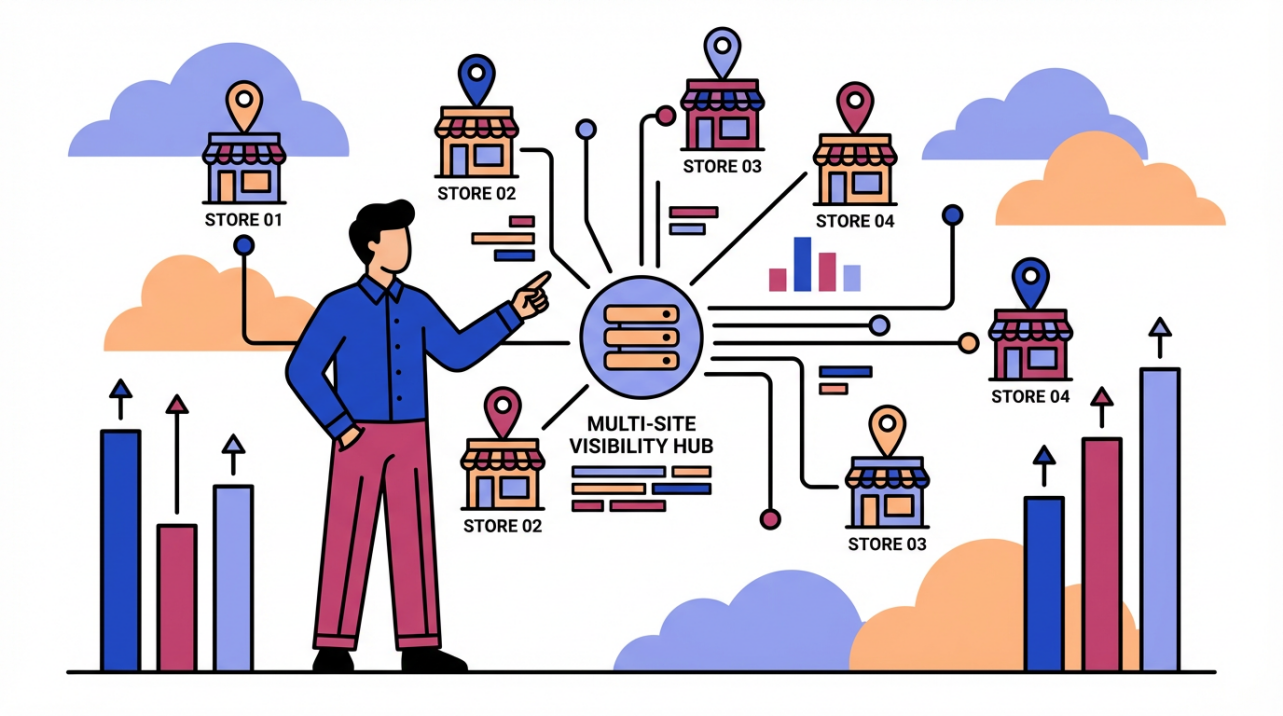
Standardize time and pay inputs across locations to get a reliable, current view of staffing and labor costs.
You can see every store clearly today by standardizing how hours and pay data are captured and reviewed, then pulling one consistent snapshot across locations.
Are you still getting a 9:00 PM text that one store ran short while another had people standing around? When each location captures the same basics the same way, the end-of-week cleanup shrinks and surprises fade. You get a practical path to align the inputs and keep a reliable, current view of every site.
Set one standard so every store speaks the same language
A consistent employee experience across locations is the backbone of seeing all stores clearly because standardized onboarding, scheduling, and pay processes make the data comparable. That consistency turns a stack of local reports into one usable picture, which is exactly what “right now” looks like for an owner.
Here is the real-world gap I see most often: Store A records time in 15-minute blocks while Store B records exact minutes, so one looks lean and the other looks bloated even if staffing is identical. In multi-location cleanups, the fastest win is to define one set of job codes, one pay period, and one approval path, then hold every manager to the same timing and naming rules.

What to standardize first
In my experience, these are the minimums that make cross-store reporting honest instead of optimistic.
Standard |
Why it affects the view |
Owner check |
Common job titles and codes |
Comparable labor costs across stores |
A report should not need a manual translation |
Unified pay period and cutoff time |
Hours roll into the same cycle for every location |
Managers submit hours by the same day and time |
Single time-entry rules |
Prevents rounding differences and missed punches |
Randomly spot-check a week and see if punches follow policy |
Make pay and time data audit-ready
Payroll processing is the set of tasks that ensures employees are paid correctly and on time, and that accuracy is what makes your multi-site view trustworthy. If the core inputs are sloppy, no dashboard can fix it.
Here is a simple calculation I use to show the cost of small mistakes: if three stores each fix two missed punches per week, that becomes about 24 corrections a month. Each correction is a chance for an underpayment, a rushed override, or a manager improvising a shortcut, so the upside of tighter controls is fewer pay disputes and cleaner labor costs, while the trade-off is daily discipline in approvals and periodic audits.
Payroll documentation is the full record set from each pay cycle, and clean documentation lets you answer questions fast without reopening last month’s pay run. Digitize timesheets, keep employee data current, and restrict access so every change is logged instead of guessed.
Connect systems to see all locations without blind spots
Integrated payroll platforms that connect POS and time tracking cut manual entry and give multi-site visibility, while the trade-offs are subscription cost, training time, and higher stakes for data security. When the data flows cleanly, you can scan a single report and trust that the numbers were captured the same way at every location.
A six-location restaurant group described in a recent industry case integrated time tracking with payroll so tipped wage and overtime rules were applied consistently across sites; that kind of uniformity removes the “Store 3 does it differently” excuses. In the field, I look for a simple test: if a manager can approve hours and the owner can see yesterday’s labor cost without a spreadsheet, the system is doing its job.

Owner cadence: keep the view current, not just accurate
Time management is planning and prioritizing tasks to meet deadlines and protect focus, and it is the owner’s tool for keeping the cross-store view current. Block two 45-minute review windows each week and you buy 1.5 hours that can prevent a weekend scramble across eight stores, especially when you use that time to review exceptions instead of reading every line.
Using the 80/20 rule keeps the review tight because a small set of tasks creates most of the impact. Focus on labor hours, overtime spikes, and exception counts, then revisit goals monthly so the review stays aligned with what you are actually trying to fix or grow.
The cleanest multi-site view is built on standards, accurate inputs, and a steady review rhythm. Put those in place and the “right now” picture stops being guesswork and starts being a decision tool you can trust.


Share:
Understanding the "Anti-Passback" Feature in Access Control Systems
Goodbye Fingerprint Woes: The Rise of "Contactless" Palm Vein Tech in 2026