
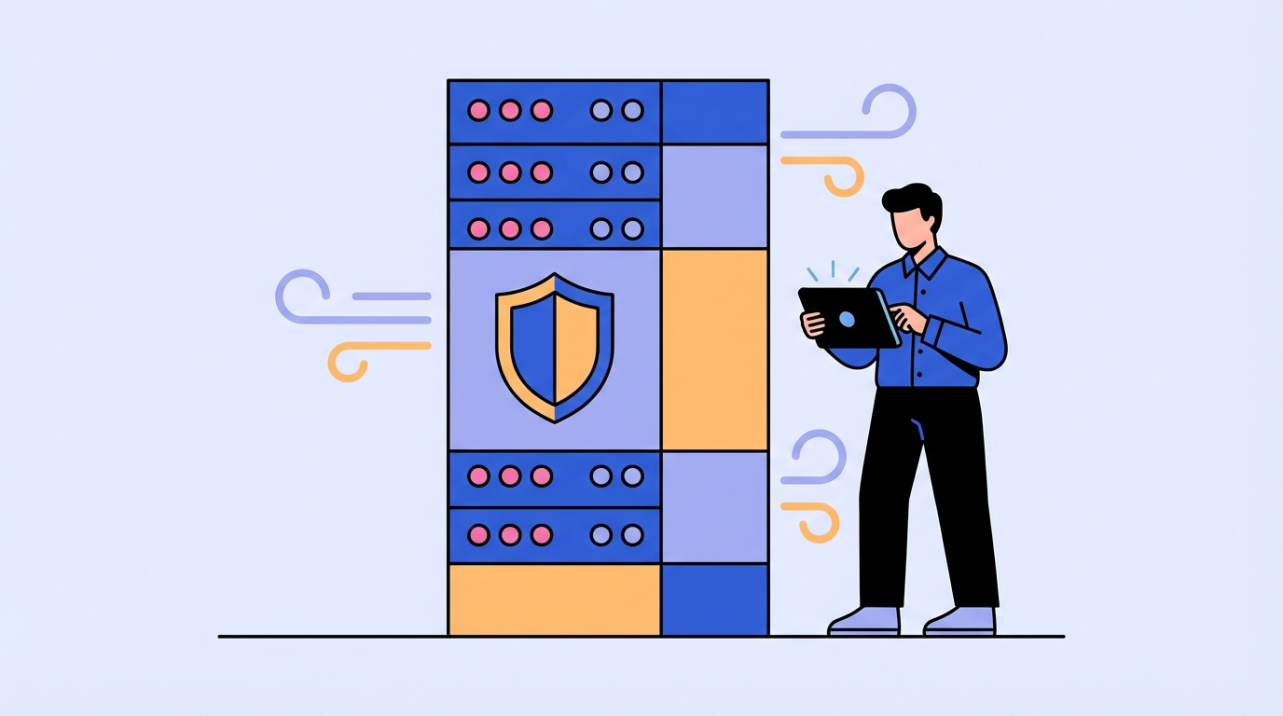
Practical steps link access discipline and dust control to keep server room readers and hardware reliable.
Is your badge swipe slow while the server room door sits open and warm air spills into the hallway? Tightening up access habits and dust control is a repeatable way to keep equipment running cooler and reduce surprise interruptions. You will get a practical routine for entry control, cleaning methods, and simple checks so door readers stay dependable.
Why access maintenance and dust control belong together
Dust blocks airflow between electronic components and forces fans to work harder, which raises overheating risk dust blocks airflow. That same dust can carry charge and trigger static discharge, disrupting normal operations. In a small room, a quick look at fan grilles or rack vents after a week of foot traffic shows how fast dust returns.
Server room security is critical to protect equipment and data and keep operations efficient server room security is critical. That makes the access reader, lock, and logs part of operational reliability, not just compliance. When the door is held open for a delivery, you lose access discipline and the pressure boundary, which lets hallway dust drift toward reader housings and rack fronts.

Set the standard for a clean entry
What clean means at the door
In real rooms, the quickest wins come from cutting tracked-in dust, because about 80% of dirt and dust arrives on shoe soles 80% of dirt and dust. A clean server room means equipment and surfaces stay free of dust so airflow and performance hold steady, which makes the reader faceplate and door frame part of your cleaning scope. On busy vendor days, swapping the entry mat and wiping the reader face keeps grit from building up.
Stop shedding materials at the threshold
A server room is not a storage area, and cardboard or foam packaging sheds particles that drift onto equipment server room is not a storage area. Unpack new equipment outside the room and bring only the clean chassis inside. If wiring or HVAC work must happen inside, floor-to-ceiling plastic curtains with airflow gaps help contain dust, which keeps the door reader and racks from wearing a fine coating by the end of the day.
Maintain a clean airflow boundary
Dust is particulate matter that accumulates on cooling systems and electronics, so you need a boundary that keeps it from migrating. Maintaining slight positive air pressure and sealing cable penetrations or raised-floor gaps cuts ingress, and a missing grommet around a cable bundle is a direct dust path you can fix in minutes.
Clean the right way so precision readers stay accurate
Use ESD-safe, HEPA-first techniques
HEPA vacuums capture 99.97% of particles down to about 0.00001 inches, which is why they remove dust instead of redistributing it HEPA vacuums capture 99.97%. Use only ESD-safe, non-conductive tools and keep moisture controlled by spraying cleaner on a lint-free anti-static cloth, never on equipment. For precision readers like badge or biometric devices, wipe the reader face and nearby wall plate with that cloth and work top to bottom so dust does not fall onto vents or the reader window.

Pros and cons of in-house versus specialist cleaning
Specialized data center cleaning is a scheduled process meant to protect critical equipment, and it relies on anti-static tools to prevent electrostatic discharge, or ESD specialized data center cleaning. In-house wipe-downs are fast and inexpensive, but they only work if staff are trained, avoid household vacuums or abrasive products, and clean hidden areas on a routine cadence; specialist crews bring purpose-built tools, security procedures, and off-peak scheduling, but they require budget and coordination. If your room has raised floors and overhead trays, a quarterly specialist visit for those hidden areas can pair with weekly in-house reader care.
Verification and cadence that stick
Set a calendar you can keep
Cleaning at least four times per year is a practical baseline for server rooms cleaning at least four times per year. A simple January/April/July/October cadence keeps it on track and gives you time to confirm temperature stays within 64-80°F and humidity within 40-60%, which supports hardware reliability.
Document and measure what changed
Pre- and post-cleaning particle counts give a measurable way to confirm that airborne contaminants dropped after a clean. A short log that notes who cleaned the reader area, what tools were used, and any dust spikes makes it easier to connect access habits to equipment issues rather than guess.
Verify when precision matters
Precision cleaning verification measures particulate or residue contamination, and UV inspection is only a pass/fail screen rather than a numeric metric precision cleaning verification. Because not all residues fluoresce, a quick UV check after a spill near a reader should complement a proper clean, not replace it.
Keep the door disciplined, keep dust out, and keep the reader area on the same calendar as the racks. That is the operational fix that saves time later and keeps access dependable.


Share:
Analyzing the Advantages of PoE Power Supply in Access Control Installation
First Step of Digital Transformation: Starting with Paperless Attendance