
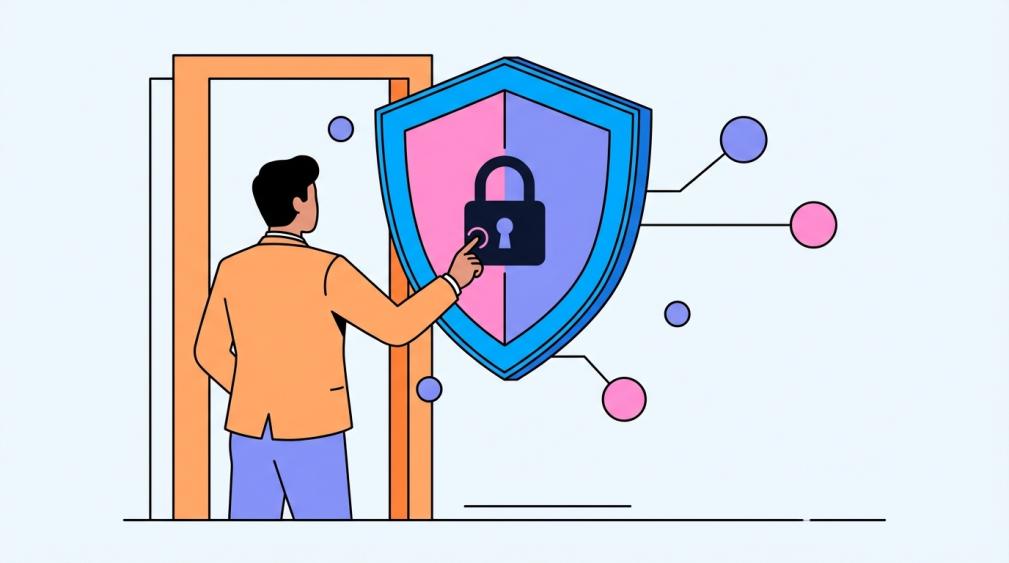
Upgrading access control reduces risk, speeds permission changes, and supports smoother operations without costly lock changes.
Upgrading access control is a strategic investment because trackable entry control reduces unauthorized access and lets you change permissions fast without rekeying.
Do you still chase missing keys or wonder who was in the stockroom after the last shift locked up? Modern door systems let you shut off access in minutes instead of changing locks, and they leave a clear record of who went in and when. You will get a practical way to decide what to upgrade, what to keep, and how to roll it out without slowing the business.
What access control actually is and why it changes risk
Plain-English definitions
Access control is a system that restricts entry using badges, fobs, cell phone apps, or PINs rather than physical keys, and it creates a log of who entered and when. In a small office with a file room, that means only the people who need access get it, and you can see exactly who was there after hours.
Video surveillance is a real-time camera monitoring system that monitors and records incidents for review, which adds visibility and evidence when something goes wrong. If a delivery pallet disappears, pairing a dock camera with a controlled door narrows the search to a specific window instead of an entire shift.
Where the investment pays back beyond security
The risk is not abstract; an average employee theft estimate puts losses around $20,000, and access control helps limit who can reach cash, electronics, tools, or client records. In practical terms, if only three people should reach the inventory cage, the system makes that boundary real rather than a policy on paper.
Visible deterrence matters, and visible security measures are linked to fewer incidents, with more than half of SMB retailers adding cameras recently. That is not just about catching a problem; it changes behavior on the floor and at the back door, where most problems start.
Access control also buys time through remote door management and temporary access, which removes the need for a late-night drive over to unlock or reset a door. In real operations, the pain points show up at 7:00 PM vendor drops and early-morning cleaners, so being able to grant and revoke access from your cell phone is a measurable relief.

Integrated platforms provide operational insight; video analytics can show foot-traffic patterns and trigger lighting or temperature changes based on occupancy. If the camera data shows a consistent lull after 3:00 PM, you can shift staffing and energy use to match actual demand.
Strategic tradeoffs you actually have to manage
Keypads look simple, but shared codes are inevitable and weaken accountability, while individual phone-based entry ties activity to a person. The upside of unique credentials is clear accountability; the downside of shared codes is that you cannot tell who entered when a code is passed around, which shows up fast when temp workers rotate.
Modern systems are often cloud-managed with audit reports, scheduled door rules, and quick deactivation of lost cards, which makes multi-site control realistic without a local server in each location. A practical test is to set one role, one door, and one time window and verify that the report matches reality before you scale the same logic to the rest of the building.

Implementation and upkeep that protect the investment
A smooth rollout is usually a phased rollout that starts at entrances and high-risk areas, then adds controlled access to restricted spaces and integrates alarms as you grow. For a shop with two public doors and one back office, that is three points to secure first, not the entire footprint.
Reliability depends on routine testing, software updates, and inspections, and nearly 8% of emergency service calls are false alarms when systems are not tuned. A workable cadence is daily log reviews, weekly tests, monthly visual checks, and quarterly full audits, which is far easier than reacting to a failure during a busy shift.
Security is broader than the door itself, and integrated systems that combine physical safeguards with cybersecurity controls reduce exposure across threats. If your access system touches the network, keep it updated and protected like any other critical system so it does not become the weak link.
When remote permission changes happen in minutes instead of days, you spend less time firefighting and more time running the business. Treat the upgrade as an operations system that protects people, assets, and time, and the return shows up in calmer days and fewer surprises.


Share:
To CFOs: How Cloud Attendance Systems Save Money by Reducing Errors
How to Enable Scan-to-Book and Auto-Unlock for Shared Meeting Rooms