
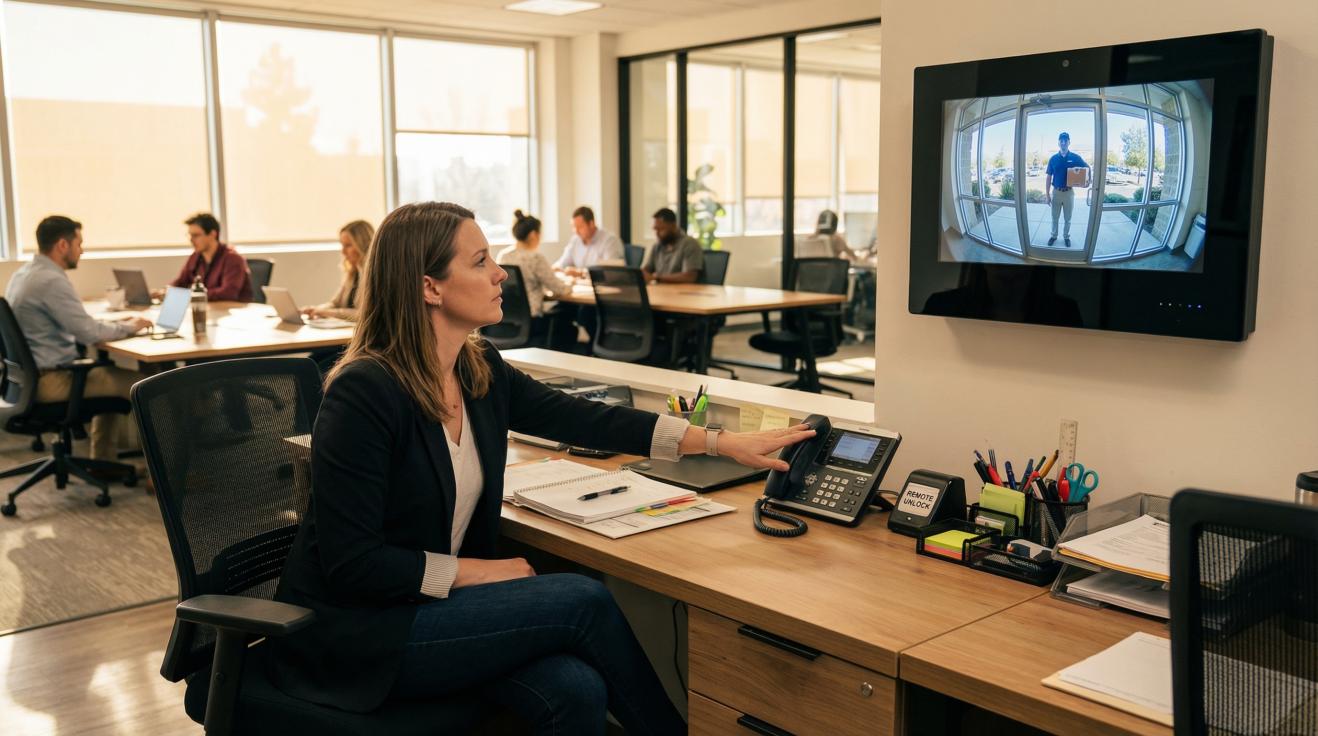
A small office should choose video at the door when it frequently admits unfamiliar visitors or leaves the front desk unstaffed; otherwise, a well-placed audio-only intercom usually provides enough security and convenience.
How Video Changes Day-to-Day Operations
Modern commercial intercoms now combine audio, cameras, remote door release, and mobile apps into one platform, turning the entrance into a managed workflow rather than a constant time-waster for your team modern intercom systems. When staff can see and talk to visitors before unlocking the door, decisions get faster and safer.
Video especially helps where street noise or accents make voice recognition unreliable. Instead of “Who did you say you’re with?” on repeat, your receptionist sees badge, uniform, and body language in seconds.
For a small office that keeps equipment, payroll data, or customer files on site, video also creates a clear audit trail of who requested access and when. That becomes valuable any time there’s a question about a missing laptop, a delivery dispute, or who was in the office after hours.
From an operations angle, video pays off most when one person is juggling front desk, admin, and HR. They can stay at their desk, verify visitors quickly, and keep work flowing instead of walking back and forth to the door all day.

When Audio-Only Still Does the Job
Audio-only intercoms are simpler: press a button, talk, and buzz the door. For low-risk spaces, that’s often all you need. Vendors point out that these basic systems are popular with smaller offices that know most of their visitors and don’t see much random foot traffic office entry intercom systems.
Audio-only is usually enough when you are inside a larger building with staffed lobby security, almost all visitors are known clients, patients, or vendors, deliveries follow predictable routines with familiar carriers, and your biggest annoyance is walking to the door rather than screening strangers.
If you just want to stop people propping the door open and keep staff from playing “door runner,” an audio-only unit with a door release button can be a cost-effective fix.
Nuance: if your building already has strong lobby security with its own video intercom, adding a second camera at your suite door often adds complexity without much extra protection.

Quick Decision Framework for Small Offices
Use this quick filter before you spend money:
- Visitor mix: If more than 20–30% of visitors are unfamiliar (job candidates, walk-ins, temp drivers), lean toward video for visual verification.
- Lone workers: If anyone works late or opens alone, video plus remote door control is a big safety upgrade, especially when integrated with access control and cameras business video intercom systems.
- Incident tolerance: If one unauthorized entry could easily cost $5,000+ in lost gear, stolen data, or downtime, the added video cost is small insurance.
- Distraction cost: If interruptions to answer the door chew through an hour or more of total staff time per day, remote intercom control (audio or video) is a must; video simply reduces the “Sorry, wrong suite” and sketchy-visitor decisions.
As a rough rule, if you check “yes” on at least two of those, video is usually worth the small office premium.
Implementation Tips If You Choose Video

Start at your main public entrance only; you can always add interior doors later as risk or headcount grows. Wireless or IP-based systems are often easiest for leased offices where you can’t tear into walls top features in modern intercoms.
Prioritize features you’ll actually use, such as clear video and audio over fancy AI, mobile app access for managers who move around, integration with existing door locks or badges, and a simple interface your receptionist can learn in one short training.
Post clear signage about video at the entrance and train staff on a basic script for verifying visitors. That combination—a light policy plus the right intercom—tightens security, reduces interruptions, and keeps your payroll hours focused on real work instead of door duty.


Share:
Door Didn't Unlock During a Power Outage? Check Fail-Safe Settings
How to Run Wires on Glass Office Doors: Aesthetic and Hidden Cabling Tips