
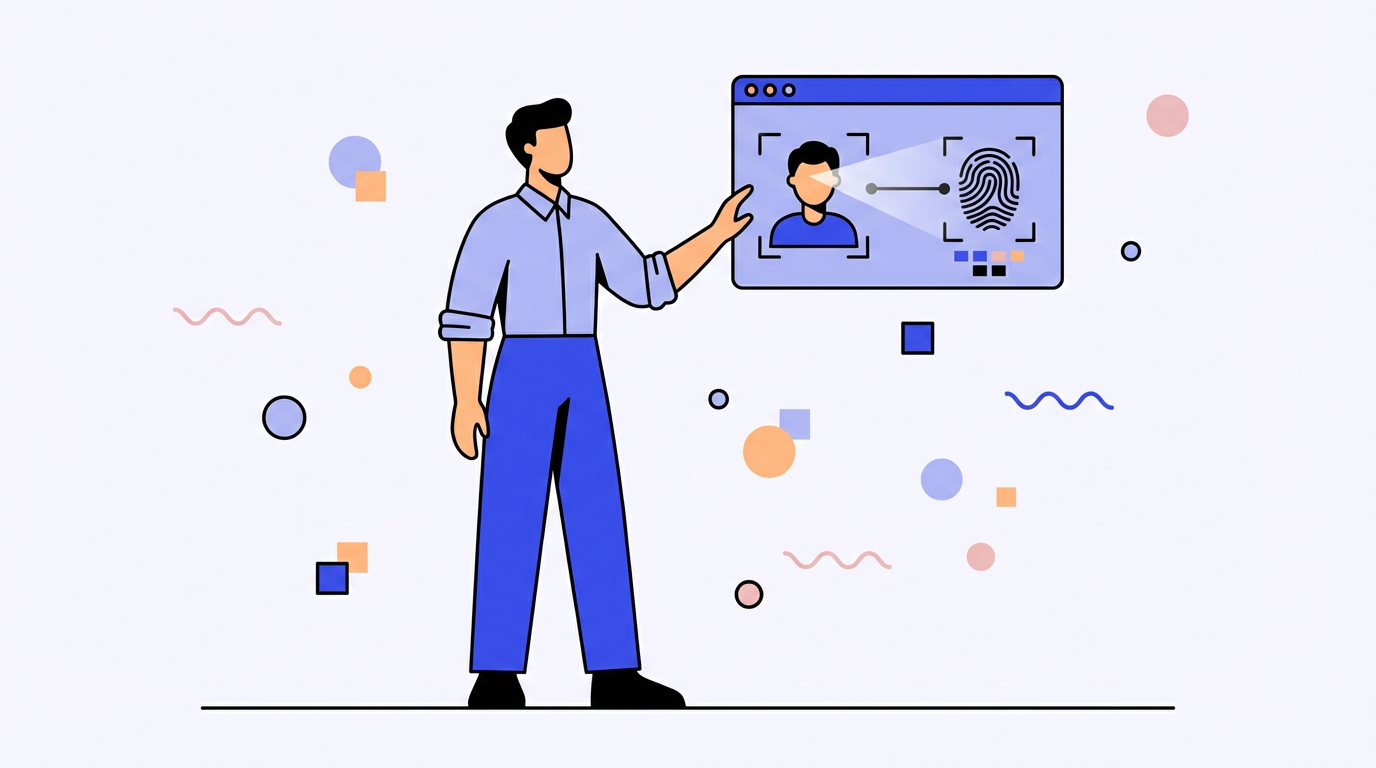
Multimodal biometrics combines two or more traits to reduce missed punches, spoofing, and payroll rework without slowing teams.
Payroll errors often start with a failed scan. Modern time clocks can send clean attendance records straight into payroll software, cutting manual corrections and after-the-fact edits. This article explains when two checks beat one and how to apply them without slowing a team.
Multimodal biometrics in plain terms
Two traits instead of one
A multimodal resource kit highlights multitrait flexibility gains and notes that verification can still work when a sensor fails because of poor lighting or a dirty reader. Single-mode systems rely on one trait, while multimodal systems use two or more traits for the same person. In practice, a time clock that checks both face and fingerprint can still verify an employee when one scan is noisy.
Common traits small teams actually use
Day-to-day systems most often use fingerprint, facial, voice, and iris scans, and facial clocking logs time for payroll by authenticating employees with a camera. Fingerprint recognition captures the print, extracts features into a template, and matches it to stored templates, while facial systems rely on a faceprint and live detection to block masks or photos. A small shop can place a camera time clock near the break room and let those entries flow into payroll software to reduce manual handoffs.
Why it's safer than single-mode
Better accuracy when conditions are messy
Peer-reviewed research reports multimodal fusion accuracy gains to about 99%, compared with about 97%–98% for fingerprint-only models, and it mitigates failures from spoofing and environmental noise. The same research pairs fingerprints with an ECG heartprint signal, adding a liveness-oriented signal to the decision. At a busy shift change, that extra signal helps keep the clock-in line moving when one scan is unclear.
Harder to trick when attackers get creative
Security guidance notes deepfake-resistant protections from multimodal biometrics and cautions against relying on a single technology. If a manager approves payroll remotely, pairing face with voice creates a second hurdle that a synthetic video alone cannot satisfy. The attacker has to fool more than one independent check.

Choosing a combination that fits payroll workflows
Match the modality to the environment
For remote use, face-and-voice authentication works well because it uses existing cameras and microphones, while iris is highly secure but often the most expensive due to specialized sensors. The best modality depends on convenience, security needs, and the environment. For remote supervisors who approve timesheets from a cell phone, that means adding a second check without new hardware.
Pros and cons you can actually act on
An industry analysis notes practical tradeoffs: face sometimes requires reenrollment as people age, voice is user-friendly and cost-effective, iris can reach up to 99.59% accuracy with infrared-capable cameras, and behavioral signals work best as an added layer to flag anomalies. If a few employees cannot show their face for cultural or religious reasons, a voice or fingerprint option keeps the process moving without forcing one rigid method. The practical win is matching the second trait to where timekeeping breaks down, not chasing the most impressive tech.
Protect the data like payroll cash
Strong protections are required: encrypt biometric data in transit and at rest, store it separately from other personal data, apply role-based access, and delete it when no longer needed. Biometric identifiers cannot be changed if compromised, so regular risk reviews and staff training matter just as much as the technology. When a seasonal employee leaves, purge their biometric data right away to keep the retention window tight.

Trust still matters. One survey reports a consumer security rating for physical biometrics at 74%, while a 2022 breach report found weak or stolen passwords drove 81% of hacking-related breaches. That is why multimodal setups are strongest when paired with clear communication about how data is protected and why the extra step exists.
Multimodal biometrics is worth it when a single scan can derail payroll accuracy or remote approvals. Start by fixing the single biggest point of failure in your timekeeping flow, then add the second trait and lock down the data from day one.


Share:
Hybrid Work Era: The Evolution of Access Control in 2026
Can Smart Time Clocks Work When the Internet Is Down?